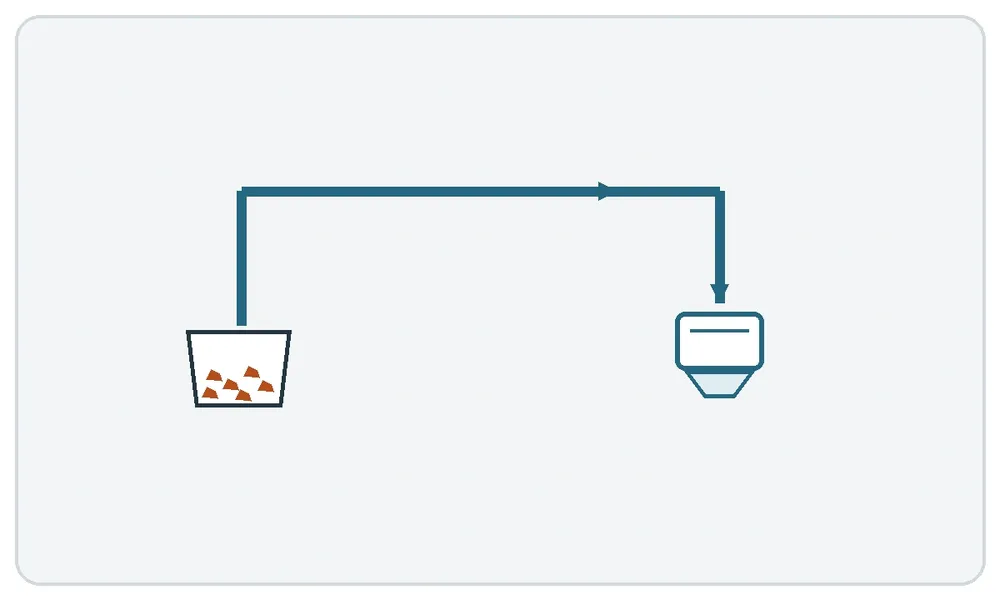

Regrind conveying trial worksheet
Use one record per material, route and configuration. Agree on the duration, sampling method and pass limits before the trial. Include normal use cycles and the expected peak in demand.
| Trial setup | What to record |
|---|---|
| Material | Resin grade and regrind source. Record flake size and shape, oversize pieces, fines and how you assessed them. Include measured bulk density and how the container was filled. |
| Loader and route | Full model and suffix, manufacturer’s stated flake suitability, pickup, horizontal run, vertical lift, bends and hose or pipe size. |
| Receiver and demand | Receiver, filter, discharge and usable buffer. Record normal and peak demand and how long the peak lasts. |
| Pass limits | Minimum supply, longest allowable feed interruption, approved regrind share and tolerance, what mass the share is based on, and how it will be verified. |
| Trial results | What to record |
|---|---|
| Delivery rate | Record the point where material is available to the blender, the measuring method and start and finish times. ___ kg ÷ ___ h = ___ kg/h using full elapsed time. |
| Supply interruptions | Count ___, longest ___ min, total ___ min. Record where and when each interruption appeared. Mark normal full-hopper pauses separately. |
| Stock at each draw | Time ___, requested ___ kg, already discharged since the previous draw ___ kg, usable stock just before the draw ___ kg. Keep a separate record for each stream. |
| Regrind share | Sample or batch ___, time and point ___, method ___, regrind ___ kg, total on the agreed basis ___ kg. Record the limit and whether it was met. |
| Decision | Retain the configuration, investigate delivery, investigate the recipe, or compare separate streams. Record the evidence and next check. |
Count material the blender can actually use
Count material after it has discharged and is available to the blender. Divide net kilograms delivered by all elapsed hours, including waiting and interruptions. Weigh the deliveries directly, or calculate them from material used plus closing stock minus opening stock in the same buffer. Use one method for each result.
Just before each draw, compare the amount needed with the usable stock already there. Material still in the receiver does not count until it discharges. A feed gap matters when the downstream process calls for more than the buffer can supply.
Suppose the blender needs 20 kg during a peak. The buffer starts with 6 kg. The first draw calls for 8 kg before the next 14 kg is discharged. Opening stock plus the later delivery adds up to 20 kg, but the first draw is 2 kg short. This is a hypothetical example.
Test your flakes on the intended route
Size and shape tell you what must pass through the system. Bulk density helps estimate the mass a receiver holds, but does not establish how the material will flow. Use a representative load and the intended pickup, pipe, receiver and discharge.
Ask which material and route the quoted rate is based on. In section 3 of the VL/VLP manual, Novatec bases its recommended VL throughput on free-flowing virgin pellets, 15 ft of flexible hose and a bulk density of 38 lb/ft³. It says that more vertical lift, bends or flexible hose reduce the recommended rate. Measure the actual delivery rate with your own flakes on the intended route.
Log where an interruption first appears. An empty receiver that cannot draw material calls for a different investigation from a full receiver that has not discharged. Record the event before changing settings, and use the equipment instructions for any inspection.
Verify the regrind share separately
Compare the measured and approved ratios on the same mass basis. The regrind percentage guide shows how a share of total batch mass differs from a share relative to virgin resin.
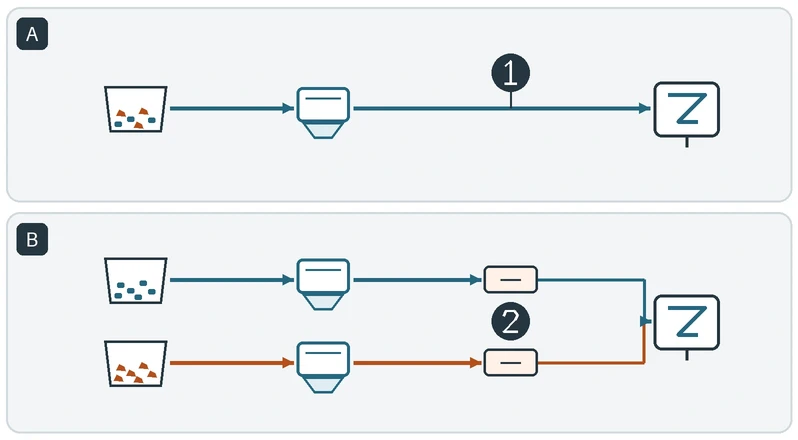
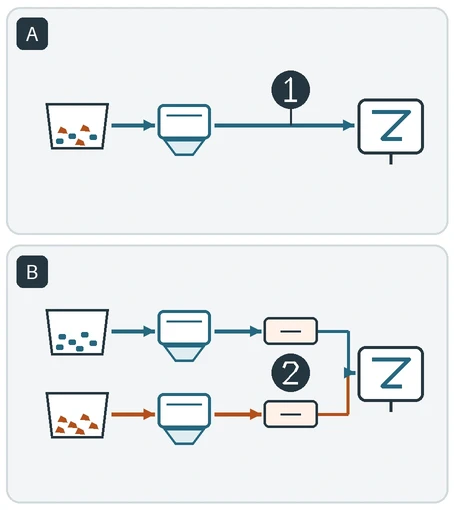
Common receiver. If pellets and flakes are premixed or picked up alternately through a timed valve, take representative samples after material discharges from the receiver. Use a validated way to determine the mass of each component. If you cannot, record the ratio as unverified. Section 9 of the Novatec manual explains why timed pickup alone cannot verify the blend.
Separate streams. Check recorded ingredient weights in individual batches and agree on an independent check for the weighing system. Use a separate sampling check if uniformity in the mixed output matters. The blending and dosing guide explains where weighing and mixing take place. The RHONG GB batch blender is an example of a four-hopper configuration that weighs ingredients before mixing.
Use the trial record to compare quotes
Ask each supplier to quote against the same material, conveyance route, measurement point, demand profile and pass limits. If supply falls short, ask the supplier to account for the exact interruption before changing equipment. If supply passes but the recipe does not, start with the sampling or weighing evidence.
For a discussion with RHONG, paste the material, route, demand and trial results into the inquiry form. Include the current loader’s full model and the proposed receiver and weighing arrangement. Send route drawings or photos to the email listed on the contact page.