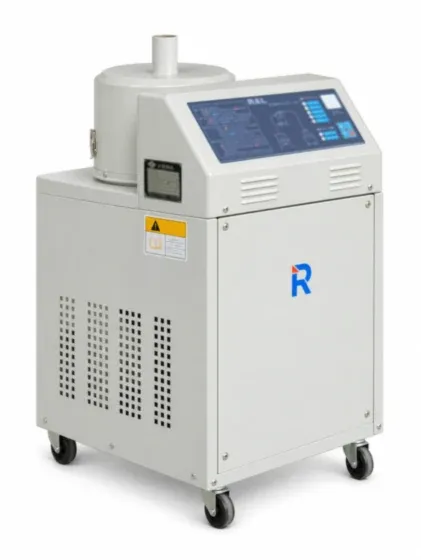
RAL-303
Vacuum autoloader for plastic pellets
Automatic transfer of plastic pellets from a feed source to a receiving hopper.
View details for RAL-303 Vacuum autoloader for plastic pellets
RAL-703 / RAL-903
Separate vacuum-loading arrangements for pellet transfer where material demand and the conveying route need to be reviewed together.
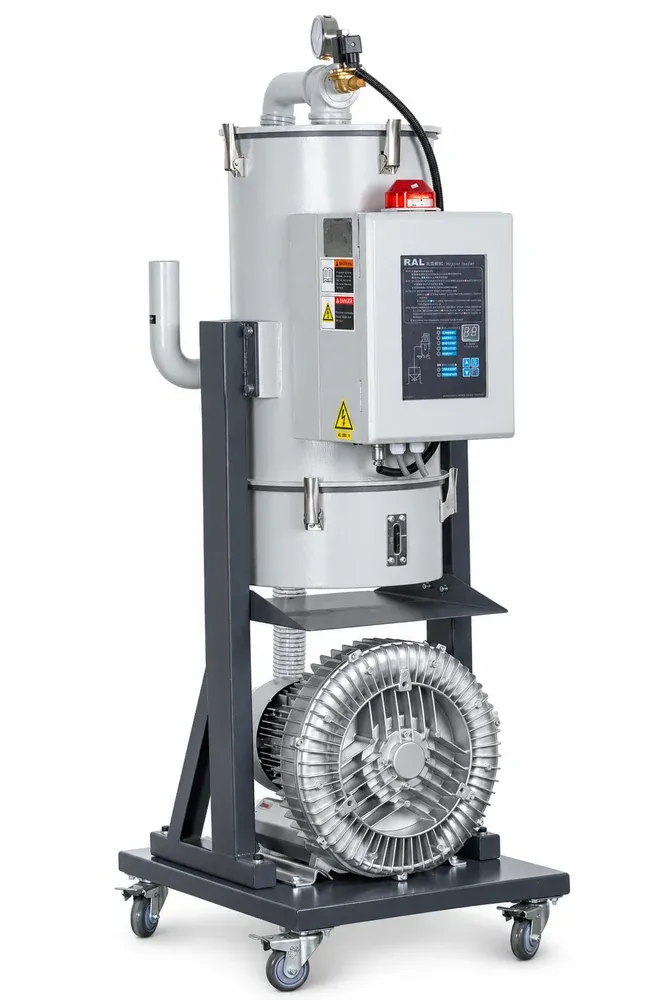
The RAL-703 and RAL-903 references describe separate pellet loaders with an air pump driven by an induction motor. The vacuum unit and receiving hopper have separate installation positions. Select the arrangement against the pellet demand and conveying route, rather than a capacity label alone.
The published RAL catalogue also names RAL-7.5HP and RAL-10HP among its separate vacuum loaders. Retain the full reference when requesting a configuration; these names do not make their motor, receiver or conveying specification interchangeable with RAL-703 or RAL-903.
Give the resin form, consumption at each receiving machine and loading schedule. Show the pickup point, vacuum-unit position, horizontal distance, vertical lift and pipe bends on a route drawing. Identify any pipework, receivers and loading controls intended for reuse. Fine material or dusty regrind needs its own handling review.
Multiple destinations or receivers are a separate configuration decision. They cannot be inferred from a larger motor or model name. Show how each receiving hopper connects to the process, and allow space for mounting and access. For layout choices, see the vacuum loader selection guide.
Request the proposed motor, pipe diameter, receiver and loading controls together with the conveying test conditions. A rate without its material and route conditions does not establish performance at your site. The quotation should distinguish supplied equipment from existing components and identify the current configuration and availability.
Compare the RAL-303 loader using the same material and route. Send the application and layout through our contact channels.
RAL-303
Automatic transfer of plastic pellets from a feed source to a receiving hopper.
View details for RAL-303 Vacuum autoloader for plastic pellets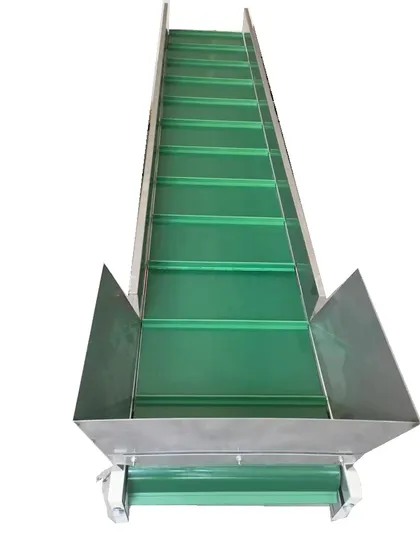
Move plastic scrap to a granulator feed point with a conveyor arrangement matched to the material and installation.
View details for Belt conveyor for plastic granulator feeding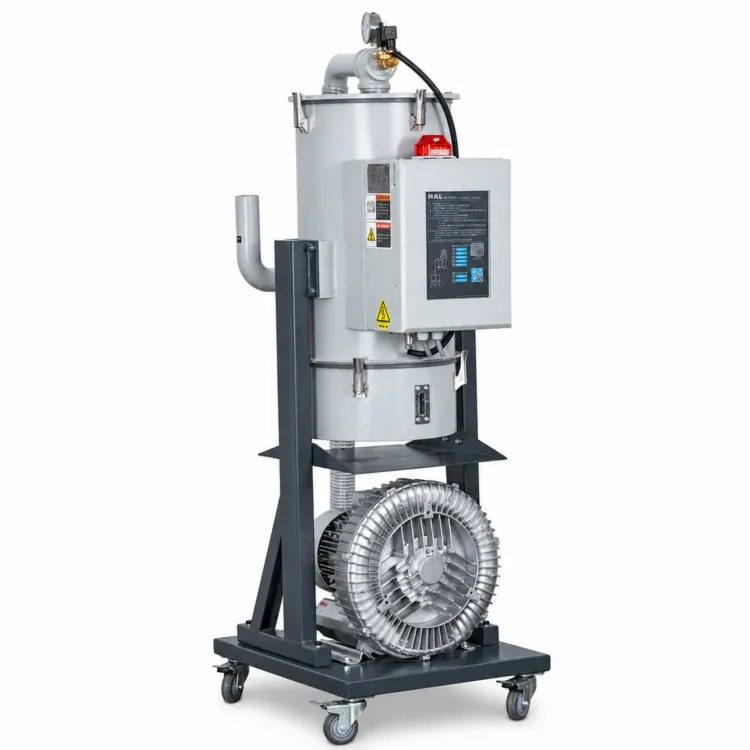
RAL-703K4
Plan pellet transfer to up to four receiving stations with the RAL-703K4 arrangement.
View details for RAL-703K4 Four-station pellet loaderSend your requirements or questions to RHONG.