Read the dimension against the component it describes
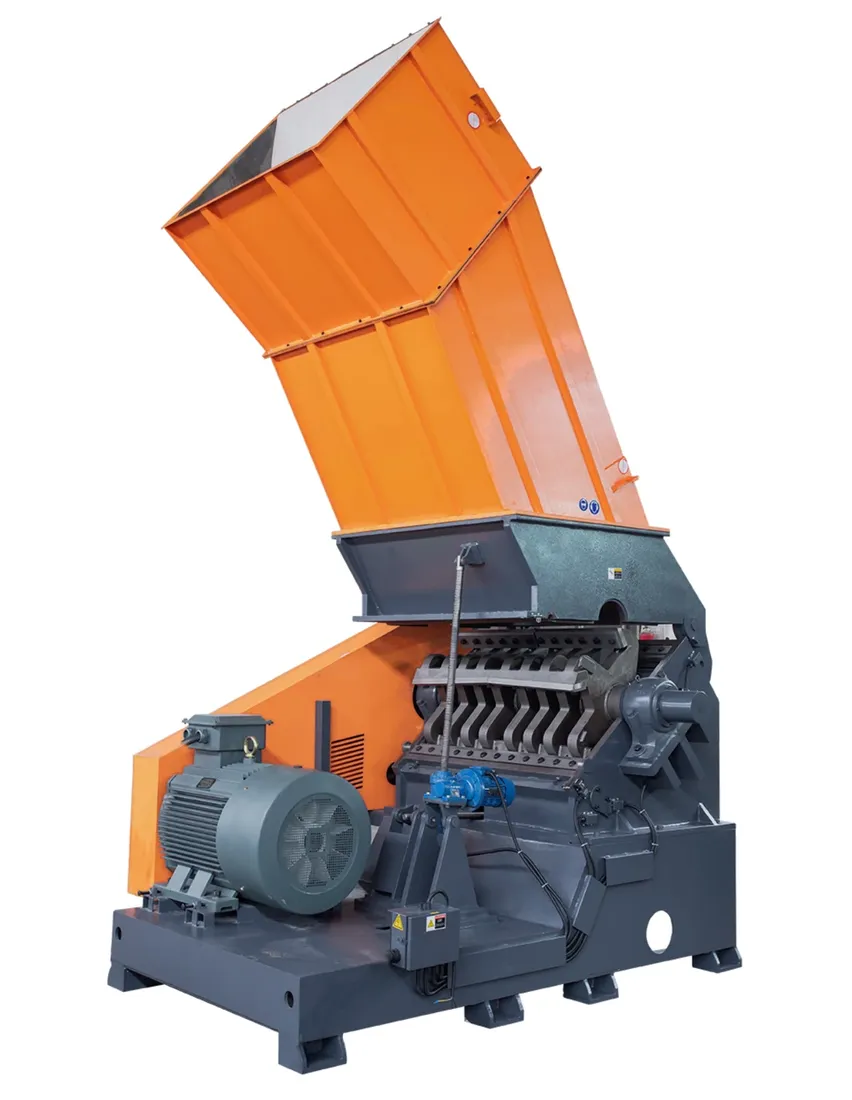
A specification headed “cutting chamber” is not an inlet drawing. For example, the published RHONG RG-1619R catalogue lists a 230 × 190 mm cutting chamber. That entry does not state the largest whole part the machine accepts or the clearance through its hopper. The medium-speed granulator catalogue provides the model context.
Two chamber dimensions leave the route into the chamber undescribed. A part may have a flange, curved end or projecting connection that governs its passage. Comparing its outer rectangle with the chamber rectangle cannot resolve those features.
Check arrival, passage and cutting contact separately
| Check | Relevant evidence |
|---|---|
| Arrival at the inlet | The complete part at the proposed loading position, with the space and presentation assumed for manual, conveyor or robot feeding. |
| Passage to the cutting area | The usable opening and any narrower section or change of direction along the complete feed path, compared with the part’s shape and orientation. |
| Contact with the cutting system | The material, wall thickness and shape in relation to the proposed chamber and cutting arrangement. |
A wide hopper mouth alone does not demonstrate passage farther inside. For long material, the length outside the machine also matters at the loading position; the cross-section nearest the opening is only part of the picture.
Reaching the cutting area is a different question from being engaged and cut suitably. The inlet’s position relative to the rotor’s cutting circle affects how the part meets the knives. A chamber’s two dimensions do not describe that relationship.
Similar outlines can conceal different cutting tasks
Consider a thin-walled hollow part and a thick solid piece with similar outer dimensions. Their envelopes may create similar questions at the inlet, but the amount and form of material presented to the knives differ. A passage drawing cannot replace an assessment of material and cutting suitability. A successful demonstration with one piece does not establish suitability for the other.
Match the demonstration to the part you will actually supply
A chamber table identifies a listed internal dimension. A demonstration using previously reduced pieces concerns those pieces; it does not establish entry of the original whole part. A drawing covering the whole part and complete feed path addresses passage. Evidence using the same material with the proposed cutting system addresses the remaining cutting question.
For the next quote review, put a dimensioned record of the actual part—including wall thickness and projections—beside the proposed feed-path drawing. Have the supplier mark which arrival, passage and cutting-contact questions it resolves. For long pipe or profile scrap, use the pipe and profile granulator page as a route-specific starting point.
Technical references: Cumberland: How to Choose a Granulator, chamber design; Conair: Granulating Scrap Successfully, part size and feeding method.