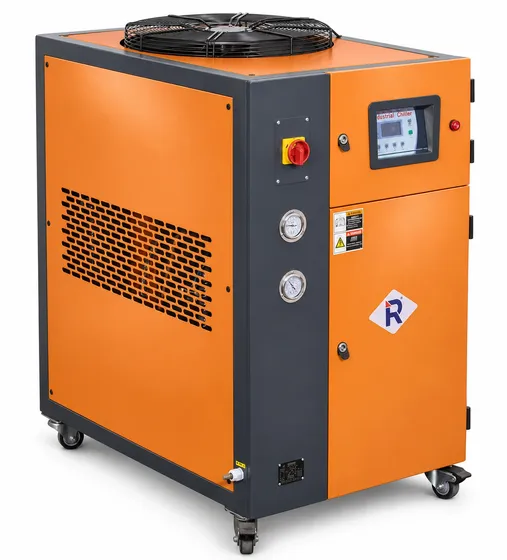
RCM-A
Air-cooled industrial chiller
Process cooling for plastics production, selected against the cooling duty and installation conditions.
View details for RCM-A Air-cooled industrial chiller
RCM-W
Process-water cooling with a water-cooled condenser and a separate heat-rejection circuit.
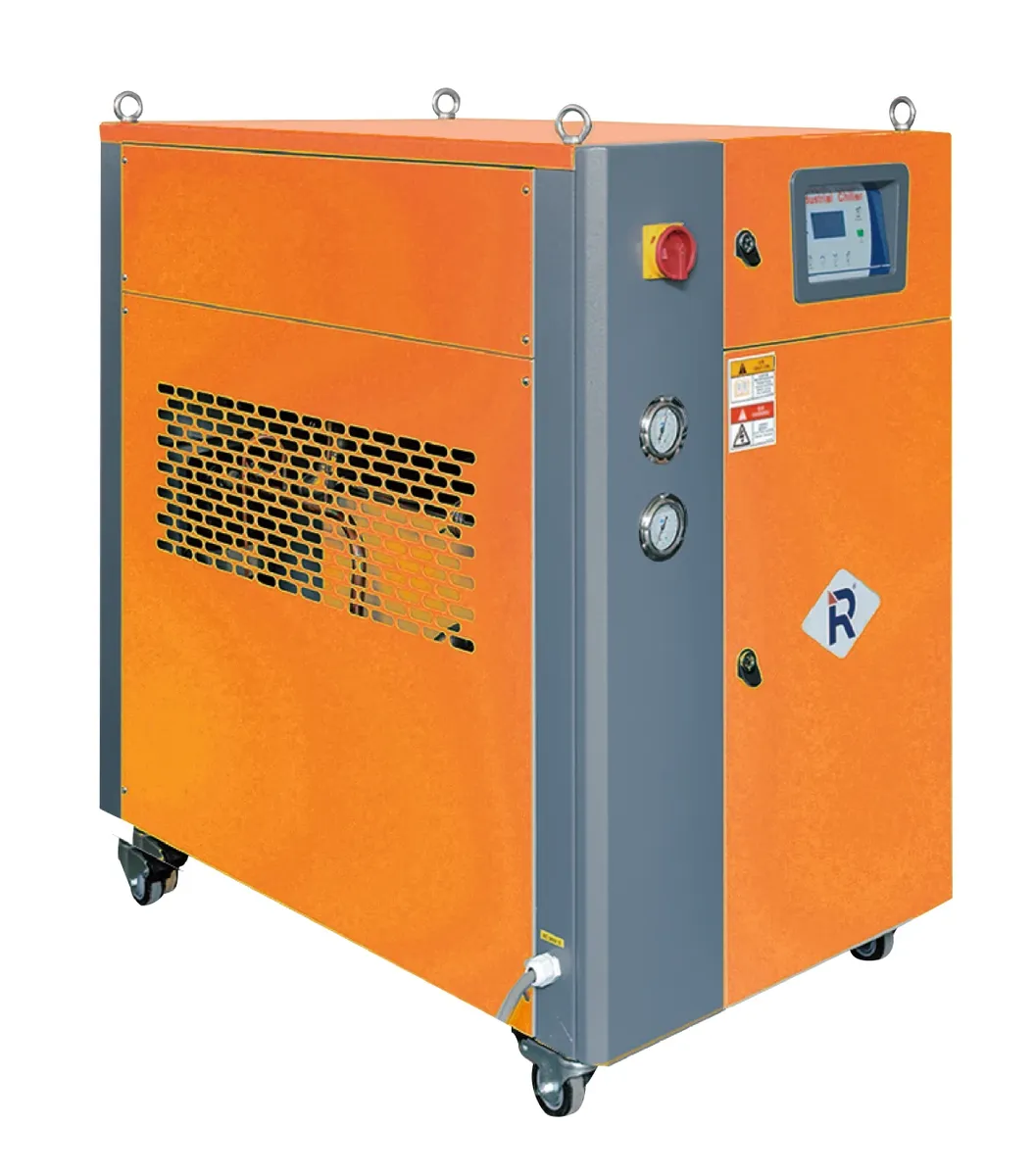
The RCM-W uses water at the condenser to carry heat away from the refrigeration system. The process-water circuit supplies the equipment being cooled. A cooling tower and its water supply belong to the condenser arrangement; their connections need to be shown separately from the mold or machine connections.
The published range describes scroll compressors and plate-type or shell-and-tube heat exchangers. Source pages use RCM-WP and RCM-WK for these design options. Keep the requested exchanger type on the quotation, together with the water quality and cleaning access. The suffix alone does not establish a universal configuration for every model.
Send the process load, required supply and return water temperatures, flow and operating schedule. Add the condenser-water conditions and the proposed tower location. Tank volume describes stored water; ask for the proposed model's cooling capacity at the required supply-water temperature and process-water flow, with the condenser-water temperature and flow stated. Electrical supply and pipe connections also belong in the equipment selection. To compare the installation requirements, see the air- and water-cooled chiller guide.
Show space for inspection of the exchangers, pump and water connections. Identify who maintains the tower water circuit and how the plant will stop or isolate the machine for service. For a facility considering heat rejection directly to ambient air, compare the air-cooled range.
Send your equipment requirements through the inquiry form.
A chiller quotation may list cooling capacity and electrical input in kW alongside refrigeration tons. Read the units and rating conditions together before comparing offers.
Air-cooled and water-cooled chillers differ on the condenser side. Compare the site requirements and complete supply scope before selecting a model.
RCM-A
Process cooling for plastics production, selected against the cooling duty and installation conditions.
View details for RCM-A Air-cooled industrial chiller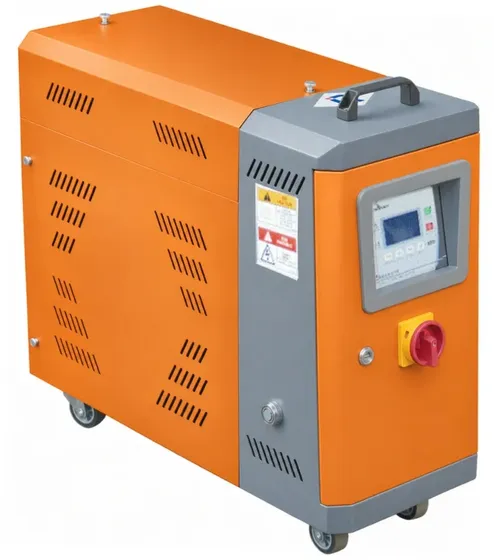
RTC-W
Water-circulating temperature control for molds and process equipment.
View details for RTC-W Water-type mold temperature controller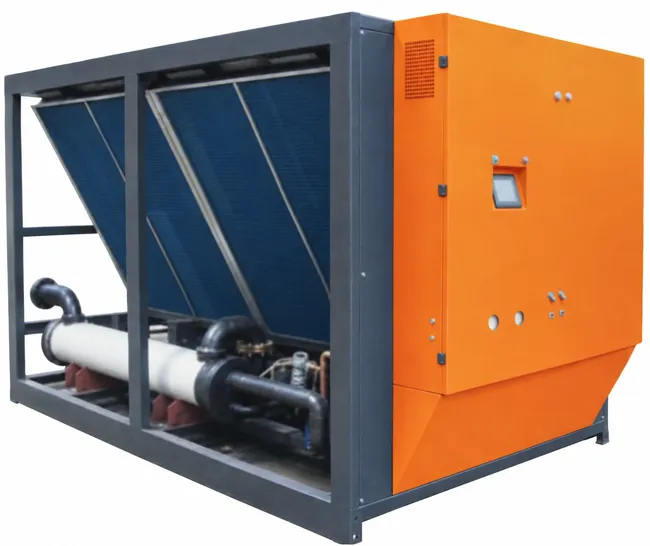
RCMC-A
Screw-compressor process cooling with heat rejected through an air-cooled condenser.
View details for RCMC-A Air-cooled screw chiller for central process coolingSend your requirements or questions to RHONG.