Start with the shape of the scrap stream
A bag of loose film offcuts, two narrow strips leaving an extrusion line and a continuous thermoforming skeleton present different feeding jobs. Describing all three as “PE film waste” leaves out the information needed to choose the inlet arrangement.
Record the material width and thickness, but also show how it arrives. A short video covering normal production and a line stop can be more useful for this decision than a photograph of the finished regrind.
Loose offcuts collected for separate processing
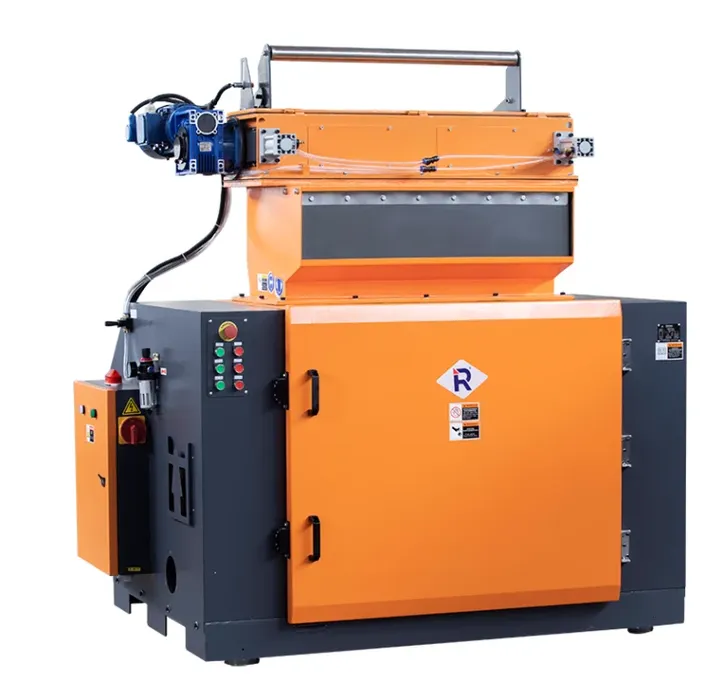
Collected scraps can be considered for a centralized film granulator such as the RG-36K. Here, the inquiry concerns a batch of material gathered from production, rather than a continuous strip that must be taken away as it forms.
Describe whether the batch consists of loose pieces, folded sheets or material still on a roll. Include typical and maximum piece dimensions and the amount accumulated per shift. An hourly total alone does not describe the feeding task.
Continuous edge trim taken from the line
The RG-36X edge-trim arrangement is described for taking in clean, dry trim as it is generated, then transferring the granulated material toward the extrusion process. This is a different material route from collecting waste for later processing.
The proposed layout needs the number and width of the strips, their thickness, the line-speed range and the distance to the granulator. Show where the regrind will be collected or blended. A route back to the extruder does not establish an acceptable reuse percentage for every resin or finished product.
A continuous web pulled by rollers
The RG-21QX thermoforming granulator uses a traction feed arrangement with adjustable speed. Related roll-feed configurations address continuous sheet or film feeding. The web geometry and the way it leaves the production machine matter alongside its polymer type.
Include web width, thickness and a photograph showing the cutout pattern. The quotation should identify how feed speed is set, what happens during line stops and which controls connect to the existing line. Adjustable speed does not, by itself, mean that an automatic synchronization interface is included.
Send the feeding route with the sample
For a useful first review, send a representative sample description, a short production video and a sketch from the scrap outlet to the regrind destination. Mark any changes between normal production, startup and rejected batches. These details help separate the feeding requirements from the cutting requirements before a machine configuration is proposed.
Sources
RHONG Chinese catalogue: RG-36X edge-trim recovery and RG-21QX traction feeding. These application descriptions do not replace the specification agreed for a particular installation.