
Metal protection starts with a location and a purpose. A device before a granulator is intended to reduce the risk of metal reaching the cutting chamber; a device after it can protect a later process or help clean the regrind. A downstream device cannot protect knives from metal that has already passed through the cutting chamber.
Follow the material, then choose the protection point
Map the route from scrap collection to the granulator, discharge and the next use of the regrind. Consider where metal could enter that route and which equipment or material needs protection. Fasteners mixed with scrap, for example, create a different purchasing question from fine metal contamination found later in a regrind stream.
Upstream protection addresses metal before it reaches the cutting chamber. Downstream separation or detection addresses material after cutting, before it reaches subsequent equipment or is reused. Both locations may be relevant, but a particular line does not automatically need every type of device at both points. Herbold's technical note on metal separation discusses protection before and after granulation.
Review how scrap is collected and kept separate as well as the proposed equipment. The guide to plastic scrap material streams helps identify what enters each batch. After granulation, the discharge and collection route determines where a downstream device could be placed in the material flow.
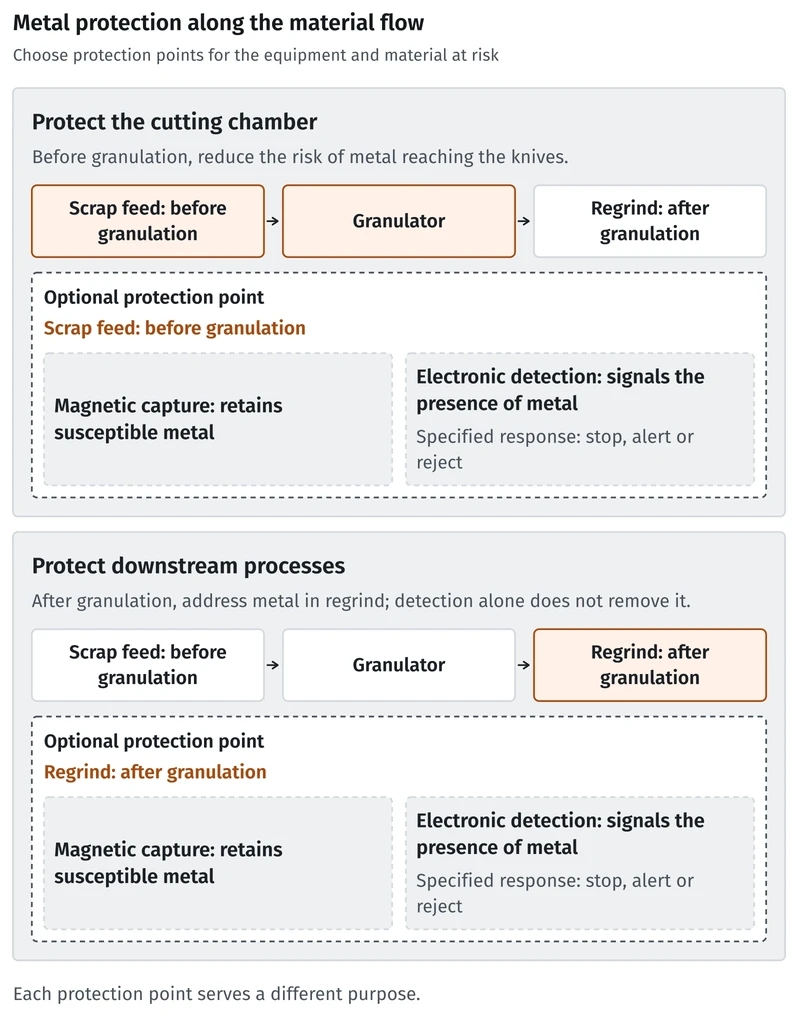
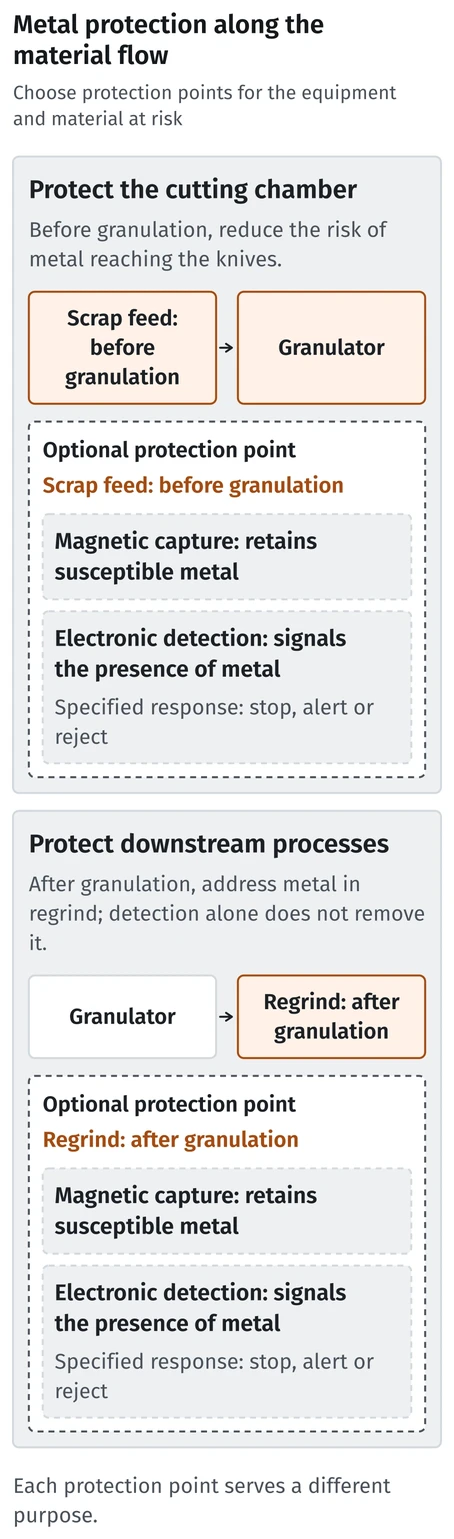
Magnets and detectors do different jobs
| Function | What it does | What to consider |
|---|---|---|
| Magnetic capture | A magnet attracts and retains susceptible metal from the material passing through or near its field. | Capture depends on the metal and its presentation to the magnet. A magnet does not remove all types of metal. |
| Electronic metal detection | A detector signals when it senses metal within its designed detection zone. | A signal identifies a detection event; removal requires a separate response. |
| Response | The system can be designed to stop feeding or machinery, alert an operator, or actuate a rejection mechanism. | Specify the action, the control interface and what happens to the affected material. |
Metal type, size and shape, material flow, bed depth and installation position all affect what a protection device can do. Stainless steels differ in magnetic response, so do not classify every stainless object simply as magnetic or non-magnetic. Electronic detection also depends on the device and installation; its ability to detect a particular contaminant should be assessed for the actual stream and operating conditions. Eriez's guide to metal separators for plastics explains the importance of material presentation and the distinction between separation and detection.
A magnet can retain susceptible metal, while an electronic detector produces a signal. Neither description alone says that every contaminant has been removed. They are different functions, and a quotation should make clear which are included.
Specify what happens after detection
Stopping a feeder or granulator is a response to a detection signal; it is not automatic rejection. The affected material may still need to be identified and removed under the site's procedures. An automatic reject mechanism, if specified, needs its own route for the diverted material and an agreed way to establish that the affected material has been separated from the usable stream.
One documented arrangement uses detection ahead of a granulator to trigger a stop, as described in a Sesotec and Wanner application note. That example illustrates a stop response, not an automatic removal function.
Assign responsibility for the detector signal, control interlock and resulting action at the equipment interfaces. Also agree how an event is reported, where any diverted material goes, and who verifies the assembled system against the agreed requirements. Qualified suppliers should plan verification for the installed system; do not put metal into a granulator as an improvised test.
Turn the protection goal into a purchase specification
| Item | Define in the enquiry |
|---|---|
| Protection goal | Cutting chamber, downstream equipment, regrind quality or a combination. |
| Location and flow | Before or after granulation, the proposed installation point, material presentation and available connection to the surrounding equipment. |
| Contamination | Known or suspected metal types and forms, and the material stream in which they may appear. |
| Function | Magnetic capture, electronic detection and any requested stop, alarm or rejection action, each listed separately. |
| Response and destination | What stops or changes when a signal occurs, where affected material goes and how its separation is confirmed. |
| Interfaces and acceptance | Supplier responsibilities for equipment, controls, interlocks and verification of the agreed system. |
Protecting the cutting chamber also supports a maintenance plan; it does not replace one. For the separate issues of knives and spares, see granulator knife maintenance.
Discuss the inlet magnet as an option
The RG-26E/36E general-purpose granulator catalogue lists a feed-inlet magnet as an option on request. Include it explicitly in your enquiry if you want it considered. It is a magnetic capture option, not a promise to remove all metal.
If the line also needs electronic detection or automatic rejection, list those functions and their interfaces separately, including who is to supply and verify each part. When you contact RHONG, describe the scrap, the suspected contamination, the equipment to protect and the configuration you want to compare.