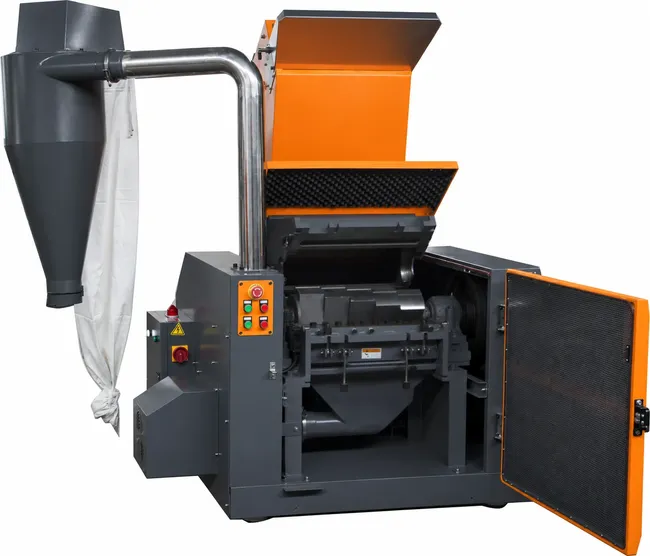
RG-26GQ
Enclosed plastic granulator
An enclosed RG granulator for molding scrap where the workshop layout and noise requirements influence equipment selection.
View details for RG-26GQ Enclosed plastic granulator
RG-26E
Cut sprues, runners and production offcuts into regrind for a planned recovery process.
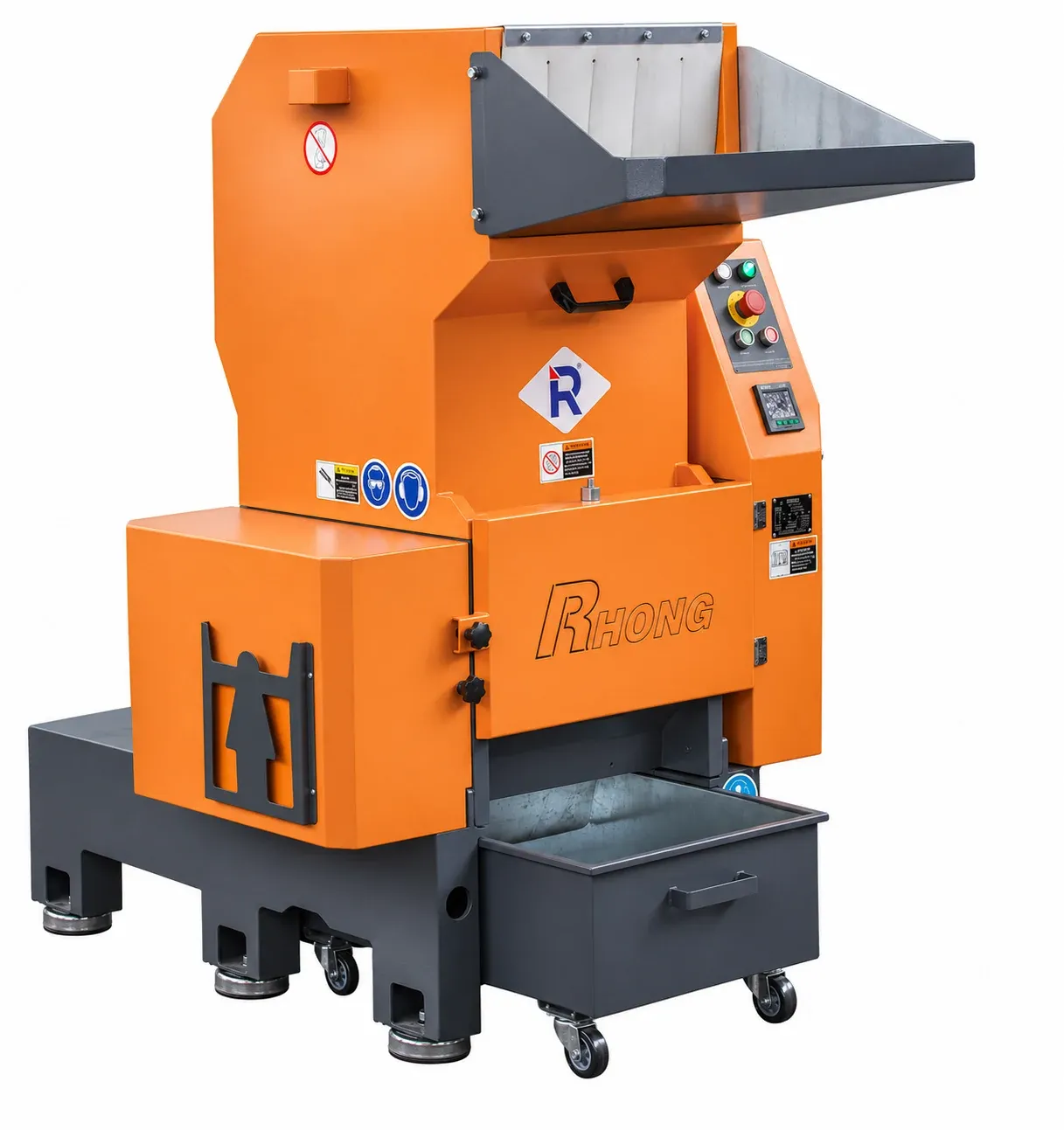
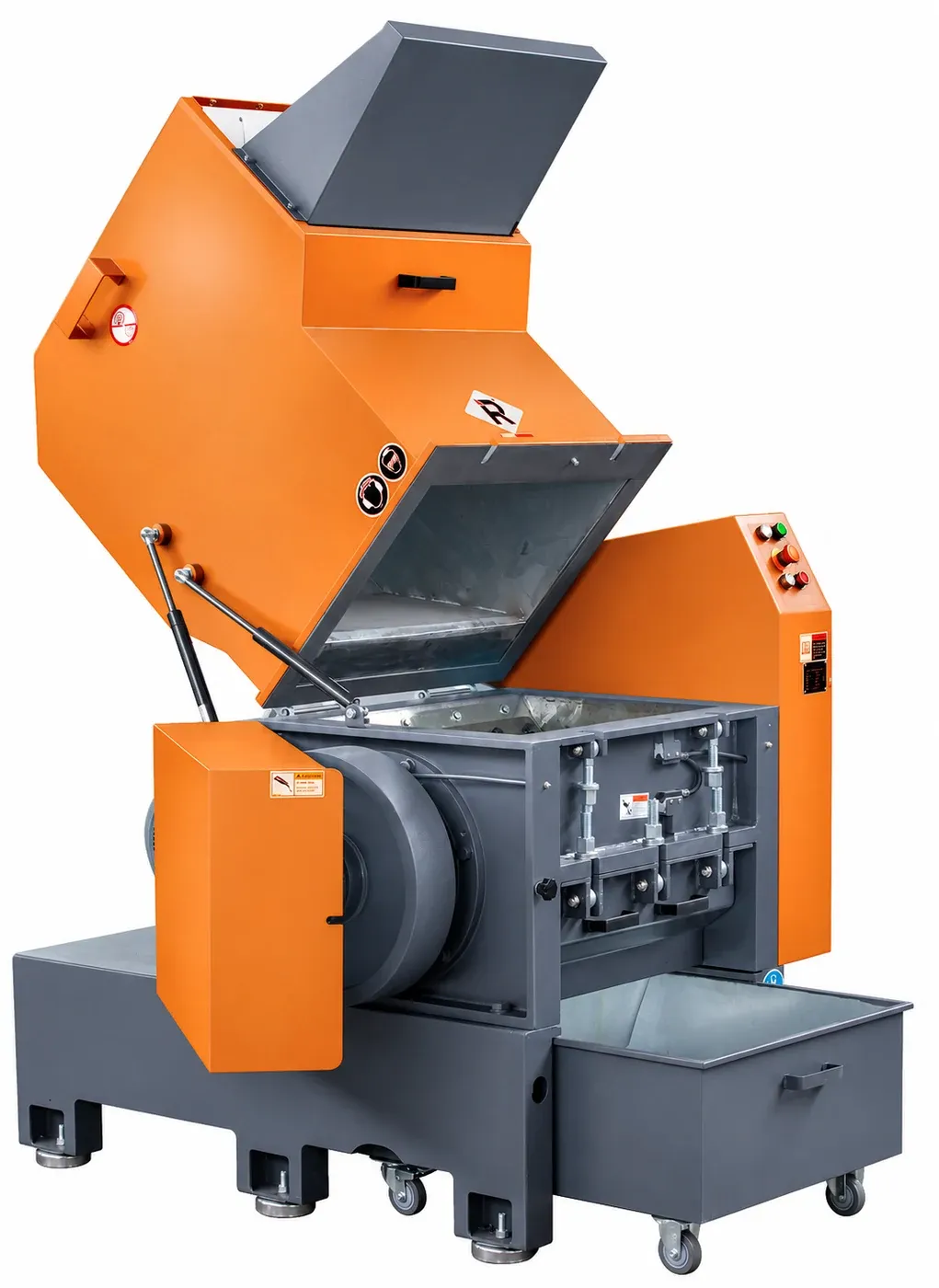
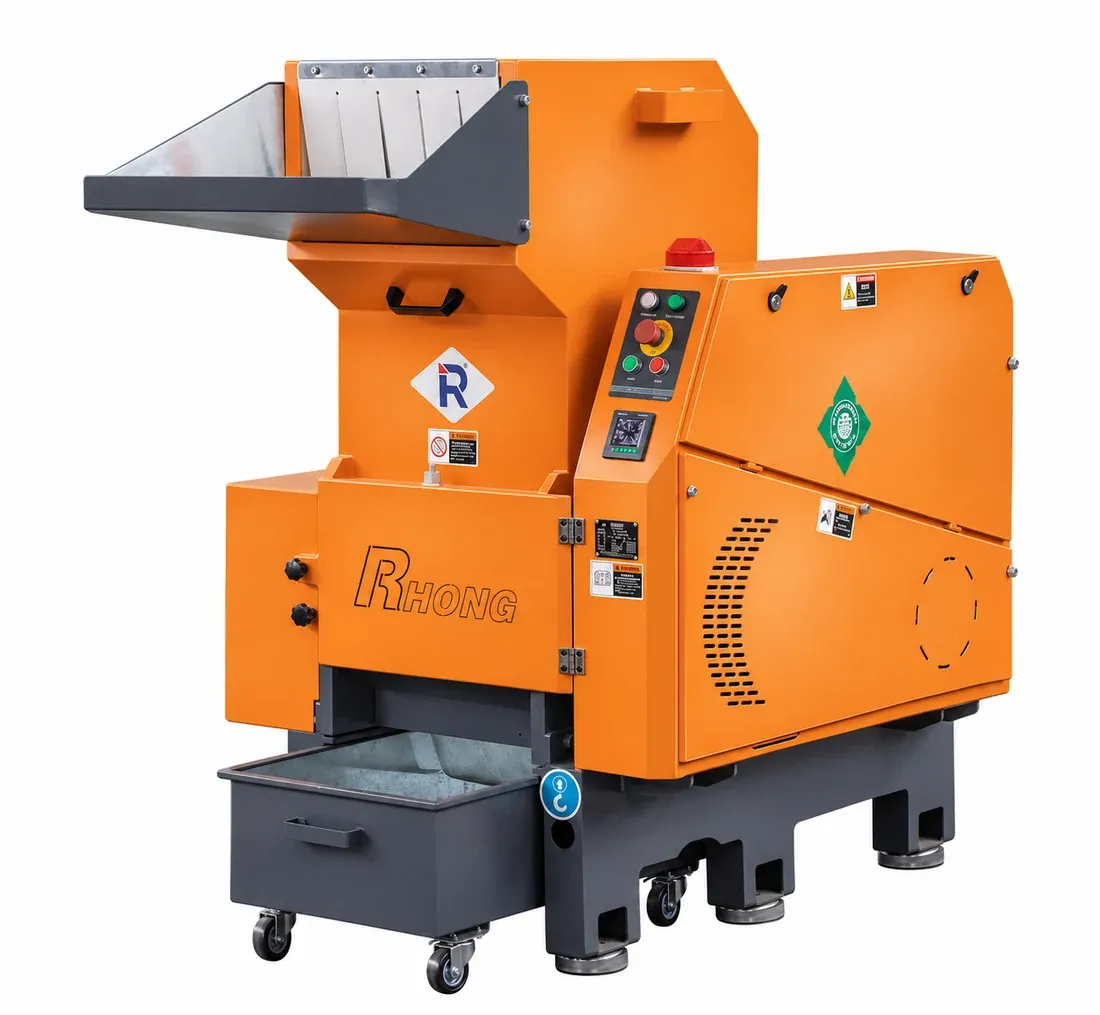
The RG-26E is a general-purpose granulator for plastic sprues, runners and offcuts. It cuts scrap into regrind; the next production step determines the output you need. Identify the polymer and explain whether the recovered material will return to molding, enter a separate recycling process or be stored for later use.
A photograph of a typical batch is useful. Include the largest pieces and their thickness, especially when a batch contains both small runners and larger rejects. Clean production scrap and material containing foreign matter need separate review.
The material and required output guide the cutting and screen selection. Hourly demand, operating hours and the feeding method describe the workload. Show where the regrind will be collected and how it will reach the next machine.
The proposed configuration should state the model, blade arrangement, screen and collection equipment. A motor rating or a capacity figure without material and test conditions is not enough to compare two quotations.
Reference data from RHONG’s published catalogue for the named variants below. Confirm the current specification and options in your quotation.
| Model | Motor power (kW) | Rotor speed (rpm) | Cutting chamber (mm) |
|---|---|---|---|
| RG-2630E | 5.5 | 560 | 370 × 300 |
| RG-2640E | 7.5 | 560 | 370 × 400 |
| RG-2650E | 11 | 560 | 370 × 500 |
Nominal catalogue data for the named models. Dimensions refer to the cutting chamber, not the feed opening. Throughput depends on material, screen aperture and feeding. Identify the supplied model and options in the quotation.
For an enclosed arrangement, see the RG-26GQ. Larger plastic parts may call for a review of the RG-56E heavy-duty range. Compare each against the same scrap sample and output requirement.
The granulator selection guide explains the material and site information to include with an inquiry.
The RG-36E catalogue describes centralized processing of molding rejects and larger offcuts, with access to the cutting area for blade changes. It is a separate size within the economic E range. Compare the named RG-36E models in the table below; the RG-26E values apply only to the RG-26E variants listed above.
Source configurations distinguish a collection box, blower discharge, a dedusting arrangement and specially sized feed hoppers. RG-36ET is described with screw discharge, while RG-36ED describes dedusting. The complete suffix and equipment list should appear in the quotation.
The RG-2650ES description identifies a front-door design and additional access provisions around screen removal. The RG-36ESJ description also refers to a front door and a motor control arrangement. Review these as named safety-access and electrical configurations; the basic E table does not establish their specifications or energy consumption.
These values are published catalogue references for the named models. Confirm the current specification and included options in your quotation.
| Model | Motor power (kW) | Rotor speed (rpm) | Cutting chamber (mm) |
|---|---|---|---|
| RG-3660E | 15 | 560 | 480 × 600 |
| RG-3670E | 18.5 | 560 | 480 × 700 |
| RG-3680E | 22 | 560 | 480 × 800 |
The dimensions describe the cutting chamber, not the feed opening. Motor power alone does not establish the hourly output for your scrap.
For the published RG-26E/36E range, -A identifies a claw-blade arrangement and -B a flat-blade arrangement. These suffixes describe the cutter configuration; the base model’s motor and chamber table does not specify the blade arrangement.
A feed-inlet magnet is listed as an option for the RG-26E/36E range. Include it in the requested equipment list if needed; it should not be assumed to be supplied with every granulator.
Plastic granulator motor kW, supply requirements and energy use
A regrind percentage is useful only when the permitted application and the mass used as its denominator are clear. Define both before setting a recipe or comparing equipment.
Rotor body, knife arrangement and cutting geometry describe different parts of a granulator configuration. Learn how to compare them on the same material and operating basis.
Metal protection depends on where the device sits and what it does. Compare upstream and downstream goals, magnetic capture, detection and the response to a signal.
When buying a screened blade granulator, compare how its knives will be accessed, maintained and identified alongside the machine’s cutting configuration.
The granulator’s outlet is only one point in the material route. Define where regrind is collected, whether it must be transferred and what happens at the receiving point before c…
Compare cleaning access across the actual material contact path, then record each stage of a colour or material changeover through quality release.
RG-26GQ
An enclosed RG granulator for molding scrap where the workshop layout and noise requirements influence equipment selection.
View details for RG-26GQ Enclosed plastic granulator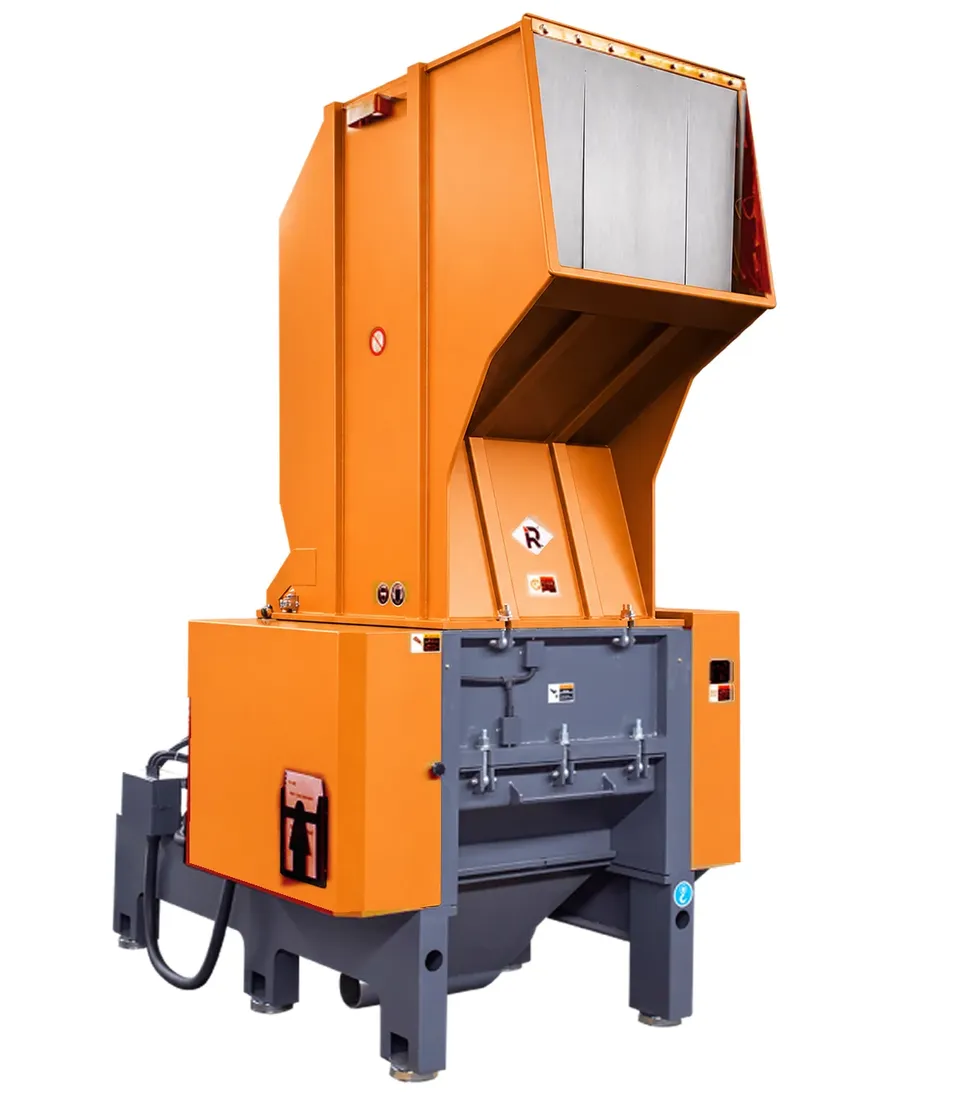
RG-56E
The RG-56E range cuts plastic parts and bulky production scrap for further recovery.
View details for RG-56E Heavy-duty plastic granulator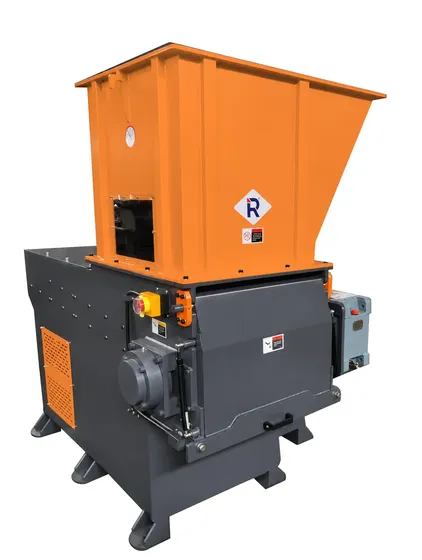
RSS series
Initial size reduction of plastic waste before the next recycling or granulation stage.
View details for RSS series Single-shaft plastic shredderSend your requirements or questions to RHONG.