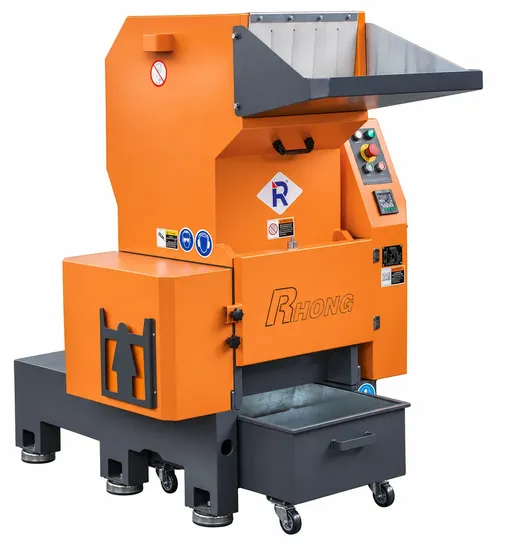
RG-26E
General-purpose plastic granulator
Cut sprues, runners and production offcuts into regrind for a planned recovery process.
View details for RG-26E General-purpose plastic granulator
RG-56E
The RG-56E range cuts plastic parts and bulky production scrap for further recovery.
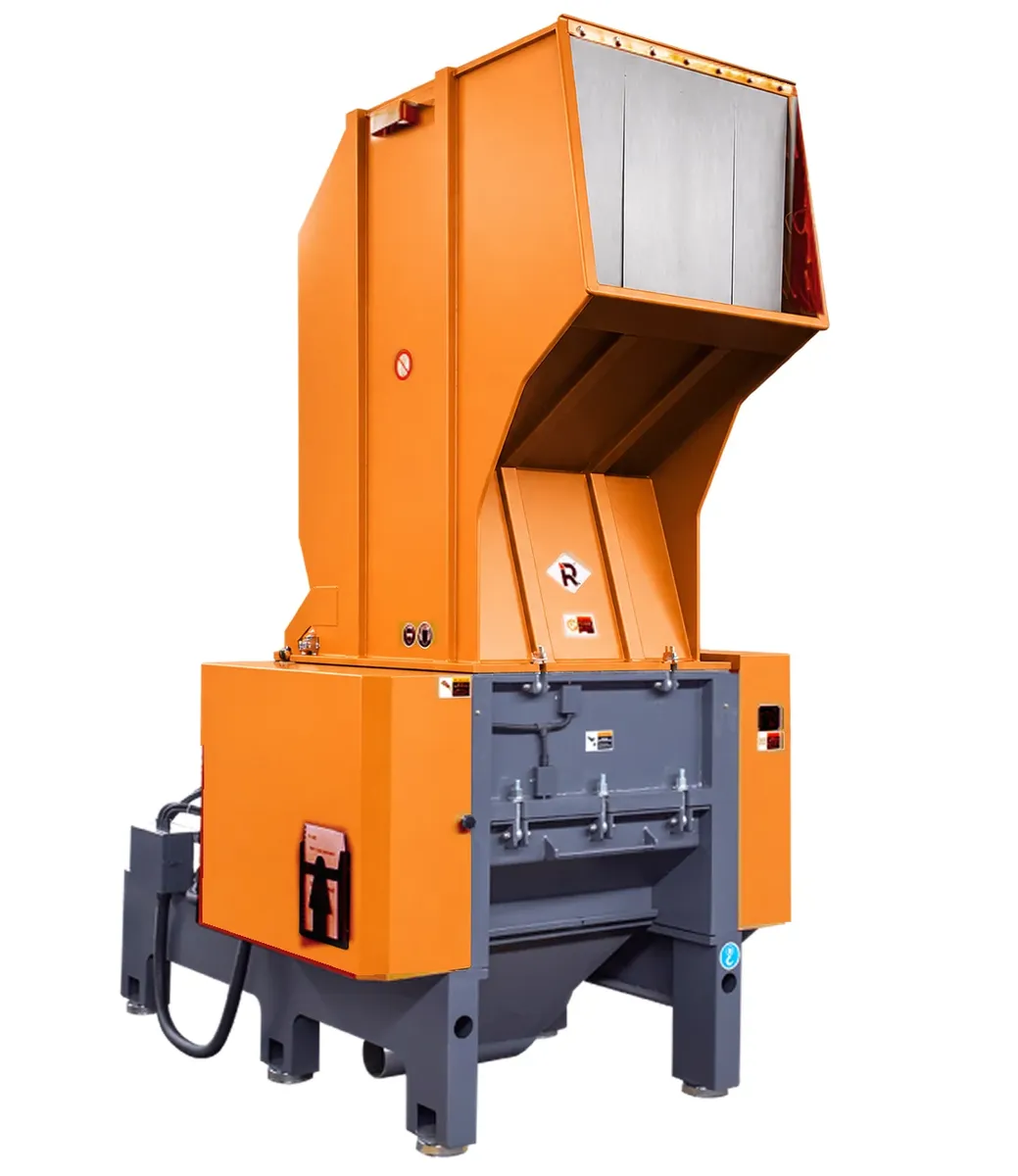
The RG-56E is a heavy-duty granulator range for plastic parts and production offcuts. Part geometry matters: a hollow container, a thick reject and a flat offcut can present different feeding and cutting tasks even when they use the same polymer.
Photograph the largest pieces and provide their overall dimensions and wall thickness. Include the mix of scrap expected during normal production, rather than only an easy-to-process sample.
Describe how parts arrive at the machine and where the cut material goes. A quotation should identify the proposed feeding arrangement, cutting configuration and collection equipment so they can be reviewed as one process.
If the incoming material needs an initial shredding stage, review the RSS single-shaft shredder and the granulator together. The output from the first stage must suit the next stage.
Reference data from RHONG’s published catalogue for the named variants below. Confirm the current specification and options in your quotation.
| Model | Motor power (kW) | Rotor speed (rpm) | Cutting chamber (mm) |
|---|---|---|---|
| RG-5680E | 37 | 560 | 800 × 800 |
| RG-56100E | 45 | 560 | 800 × 1000 |
| RG-56120E | 55 | 560 | 800 × 1200 |
Data applies to the named standard catalogue variants, not RG-56EJ, RG-56G or every large part. Chamber dimensions are not feed-opening dimensions. Throughput depends on material, screen and feeding frequency.
Specify the intended regrind size or downstream requirement, hourly demand and operating schedule. Capacity depends on the actual material, feeding and machine configuration; a heavy-duty description does not establish suitability for every plastic part.
For smaller molding scrap, also review the RG-26E or enclosed RG-26GQ. The selection guide provides a common set of inputs for comparing them.
The RG-56EY source describes a feed-hopper configuration for the heavy E range, while RG-56EF adds conveying of cut material. RG-56ED descriptions identify a dedusting arrangement. Specify the receiving container, conveyor approach and complete output route alongside the cutter. The standard values above are not transferred to these configurations.
The RG-46E catalogue describes central cutting of molded items, short pipes, profiles and sheets. RG-46EF is described with an output conveying arrangement. This size requires its own feed and chamber specification; it is not another name for RG-56E. Confirm the feed opening and chamber dimensions for the complete model in the quotation.
For a comparison, provide the actual largest pieces and their wall thickness, then show where the output will be collected. Blade and screen access should remain clear when the feeding conveyor and collection system are installed.
The published RG-56EJ reference combines a heavy-duty granulator with an electrical control arrangement. Keep the complete EJ designation and the machine and control package together in the quotation; the standard RG-56E table does not establish the EJ specification.
For the controls review, provide the site electrical supply, operating schedule and expected changes in feeding load. Where a conveyor or collection equipment is involved, define the start and stop sequence and interfaces between machines. Show the control-cabinet position and operator access, and request the proposed control drawings and equipment list. Confirm the current EJ configuration and availability before ordering.
These values are published catalogue references for the named models. Confirm the current specification and included options in your quotation.
| Model | Motor power (kW) | Rotor speed (rpm) | Cutting chamber (mm) |
|---|---|---|---|
| RG-4680E | 30 | 560 | 660 × 800 |
| RG-46100E | 37 | 560 | 660 × 1000 |
The dimensions describe the cutting chamber, not the feed opening. Motor power alone does not establish the hourly output for your scrap.
The largest lump and the required regrind matter more than a machine label. Compare direct granulation with a shredding stage before choosing a route for solid purgings.
Use the same material, output requirement and operating conditions when comparing machines. Start with the scrap that will actually reach the feed opening.
RG-26E
Cut sprues, runners and production offcuts into regrind for a planned recovery process.
View details for RG-26E General-purpose plastic granulator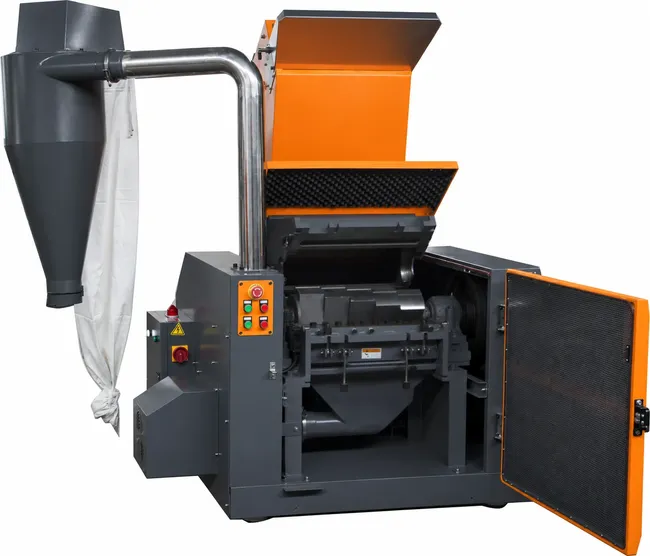
RG-26GQ
An enclosed RG granulator for molding scrap where the workshop layout and noise requirements influence equipment selection.
View details for RG-26GQ Enclosed plastic granulator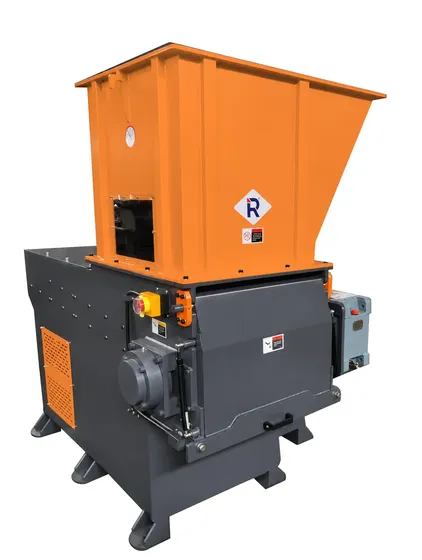
RSS series
Initial size reduction of plastic waste before the next recycling or granulation stage.
View details for RSS series Single-shaft plastic shredderSend your requirements or questions to RHONG.