

Check what the hot circuit can take
A purpose-built pressurized water controller can keep water liquid above its atmospheric boiling point. Check the operating limits of the assembled mold circuit, including manifolds, hoses, fittings and seals. Ask each supplier to identify the pressure those components will see at operating temperature, including expected peaks. One component with a lower rating can rule out the whole proposal. Regloplas on pressurized-water units
For an oil proposal, name the heat-transfer oil and confirm that it is compatible with the mold circuit components. Ask how the unit monitors circulation and responds if flow drops. Have the supplier itemize any hoses, fittings or seals that must be replaced. Regloplas on forced-circulation oil units
Ask for flow at your circuit's pressure drop
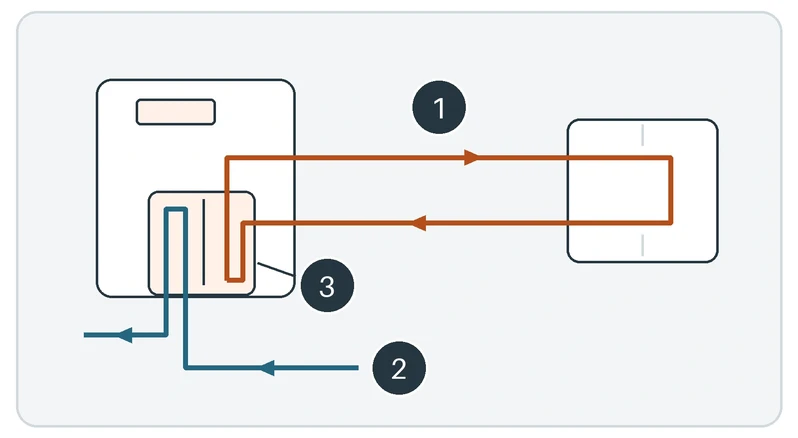
The pressure rating tells you what the components can withstand. The difference between supply and return pressure is the resistance the unit must overcome at the required flow. Give both suppliers the same circuit layout and ask what flow their proposed unit can deliver at your pressure drop. Specify the fluid, its temperature and the points between which the pressure drop applies. Regloplas on mold circuit resistance
Suppose the circuit needs 20 L/min (Δp 1.3 bar) between the controller's external supply and return connections. These are example values. A quote listing Qmax = 40 L/min still leaves the working point open. Ask for the proposed unit's curve or selection data for the specified fluid and temperature. If the mold has parallel circuits, also agree on how to check the minimum flow in each critical branch. HB-Therm on measuring parallel mold circuits
Separate warm-up from running cooling
Compare warm-up from the same starting condition and agree where you will measure the target temperature. During production, ask for cooling capacity at the intended process-fluid temperature and molding workload. Provide the plant-water inlet temperature, available flow, supply pressure and any return or discharge backpressure.
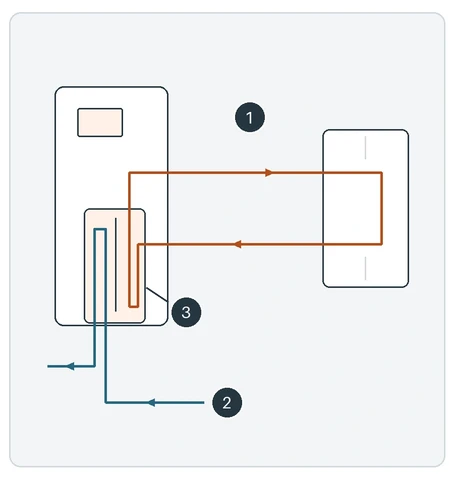
With indirect cooling, a heat exchanger separates plant cooling water from the fluid circulating through the mold. Some direct-injection water units instead admit suitable cooling water to the mold circuit. Ask which arrangement is quoted and what pressure range, water quality and connections it requires. Oil units can also use plant water for heat rejection. Conair TW-Plus manual, sections 2 and 3 · Regloplas oil unit cooling specifications
Compare both quotes on one sheet
Send the same worksheet to both suppliers. Ask them to state their assumptions and itemize the site changes needed for the proposed unit.
| Check | Information for both quotes |
|---|---|
| Hot circuit | Send the mold and fluid temperatures and the component ratings. Ask for the approved fluid and operating range, the highest pressure expected at each relevant point and the parts that must change. |
| Pump and branches | Send the circuit drawing, target flow per branch and available pressure-drop data. Ask for the flow at the stated pressure drop and fluid temperature, and how to verify flow in each critical branch. |
| Warm-up | Give the starting conditions and name the point where you need to reach the target. Ask for heat-up time under those conditions. |
| Production cooling | Give the molding workload and plant-water inlet temperature, flow, supply pressure and return or discharge backpressure. Ask for cooling capacity at those conditions and acceptable water pressure, backpressure and quality. |
| Installation | List utilities, space and existing connections. Ask which parts and services are included and what you will need to add or change before commissioning. |
Keep the quote provisional if a hot pressure limit or pump working point is missing. If both units meet the duty, compare the required installation changes and the cost of maintaining the fluid or water circuit.
Check the model and quote scope
Take the worksheet to the relevant equipment page and request the exact model and operating conditions for your mold. Water proposal: RHONG RTC-W water mold temperature controller. Oil proposal: RHONG RTC oil mold temperature controller.