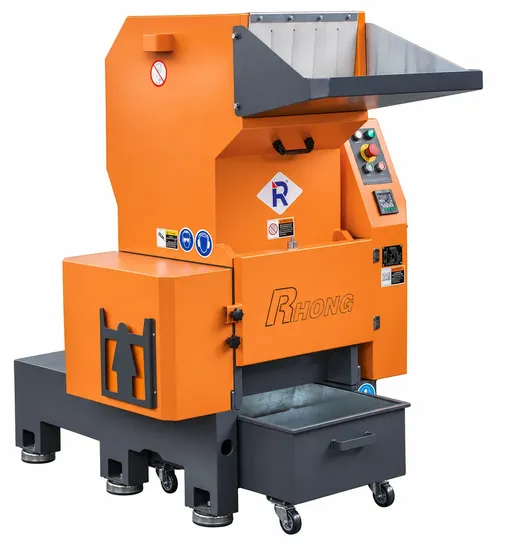
RG-26E
General-purpose plastic granulator
Cut sprues, runners and production offcuts into regrind for a planned recovery process.
View details for RG-26E General-purpose plastic granulator
RG-46G / RG-56G
Heavy-duty central granulation with a split chamber, outboard bearings and rotor configurations for bulky plastic waste.
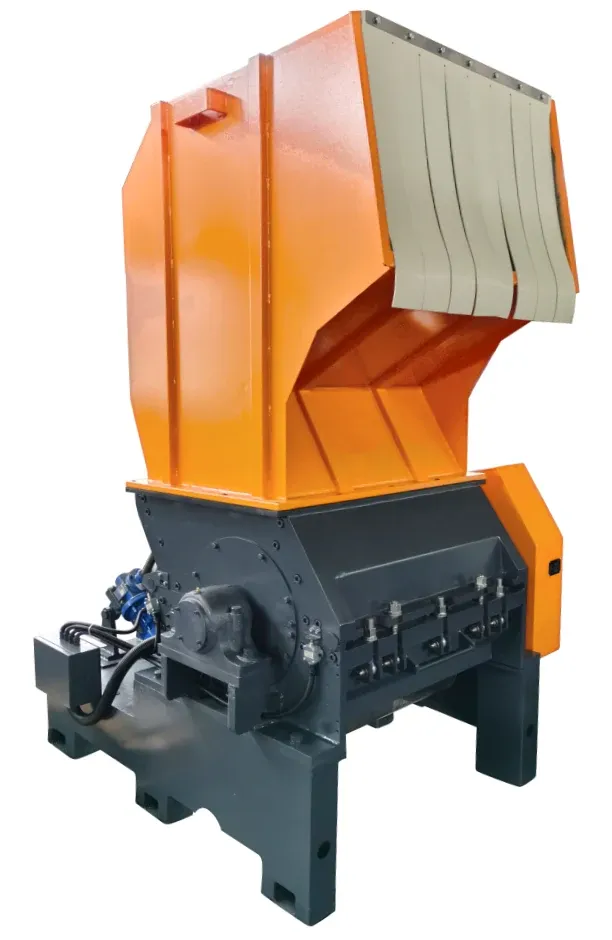
RG-46G and RG-56G granulators have a welded steel cutting chamber, bearings outside the chamber and motor-assisted hopper opening. The chamber opens through its middle for access to the rotor and fixed blades. These are structural points to compare with the RG-56E range when choosing a central recycling station.
Published applications include hollow molded parts, containers and production offcuts. Piece shape and wall thickness determine how the rotor encounters the material. Provide examples of the normal waste mix as well as the largest reject.
For bulky molded parts or containers, also review the RG-66S granulator and compare how the whole part would be presented to each machine, along with the space needed for feeding and maintenance access.
The RG-56GY5 source describes a solid rotor with five rows of knives for bottle material. This configuration has a different blade layout from the three-row design described for the standard RG-56G. Specify the rotor in the quotation; a table for a standard G model cannot establish the specification of a G5 or GY5 machine.
For PET bottle scrap, identify whether bottles are loose or compacted, their condition and any foreign matter. The cutting stage and any cleaning or separation equipment should have separate scopes.
Allow room for the opened hopper, screen access and collection system. A blower and cyclone are catalogue options. State whether output goes into bags, a storage box or another machine, and describe the required regrind. The proposed feeding and discharge equipment can then be matched to the site's handling route. For output comparisons, use the kg/h comparison record.
For aluminium–plastic panel scrap, review the separate RG-56120G7 application reference with the actual material composition; the standard G range does not establish metal suitability.
In the published RG-46G / RG-56G catalogue, -A identifies a claw-blade arrangement and -B a flat-blade arrangement. Name the knife type when requesting a quotation, and describe the material and shape to be processed. Knife type and knife-row layout are separate specifications: identify the required arrangement, including whether the separately described RG-56GY5 five-row bottle configuration is needed. The guide to granulator rotors and knives explains the terms used when comparing cutting arrangements.
RG-26E
Cut sprues, runners and production offcuts into regrind for a planned recovery process.
View details for RG-26E General-purpose plastic granulator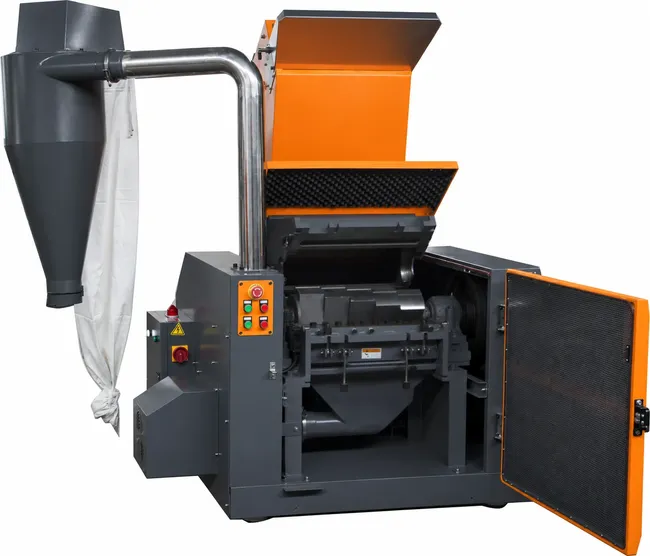
RG-26GQ
An enclosed RG granulator for molding scrap where the workshop layout and noise requirements influence equipment selection.
View details for RG-26GQ Enclosed plastic granulator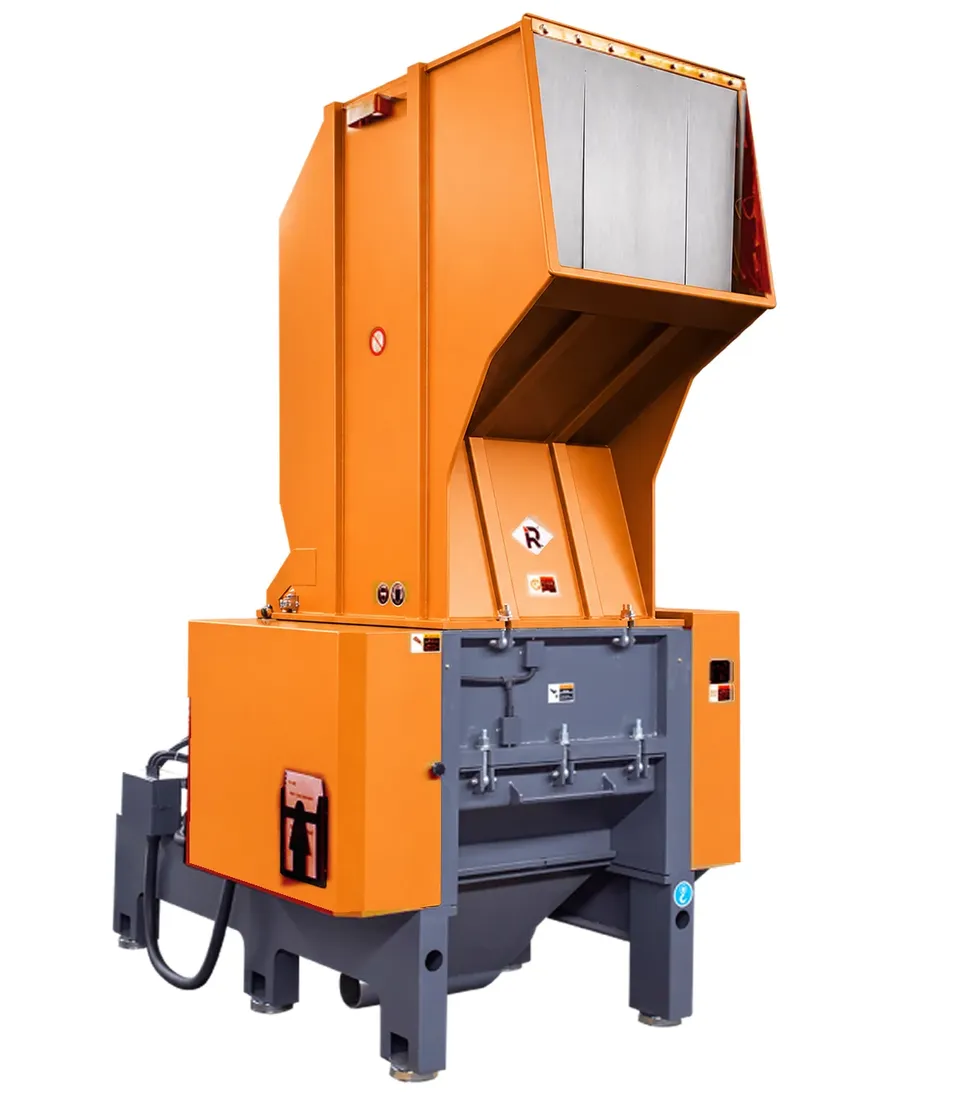
RG-56E
The RG-56E range cuts plastic parts and bulky production scrap for further recovery.
View details for RG-56E Heavy-duty plastic granulatorSend your requirements or questions to RHONG.