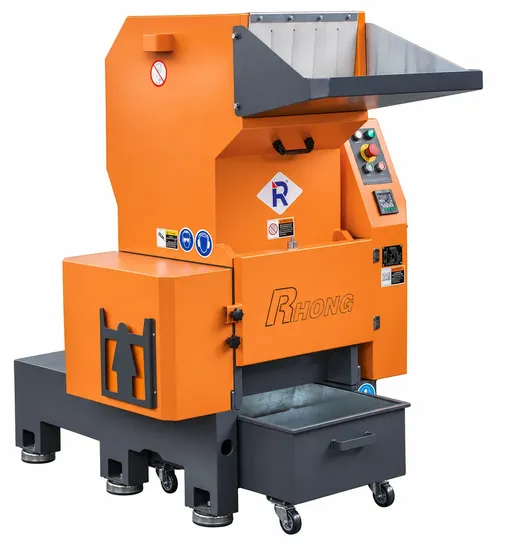
RG-26E
General-purpose plastic granulator
Cut sprues, runners and production offcuts into regrind for a planned recovery process.
View details for RG-26E General-purpose plastic granulator
RG-18 / RG-20 / RG-23
Beside-the-press granulation of small sprues and runners, with a direct gear drive and a planned regrind return route.
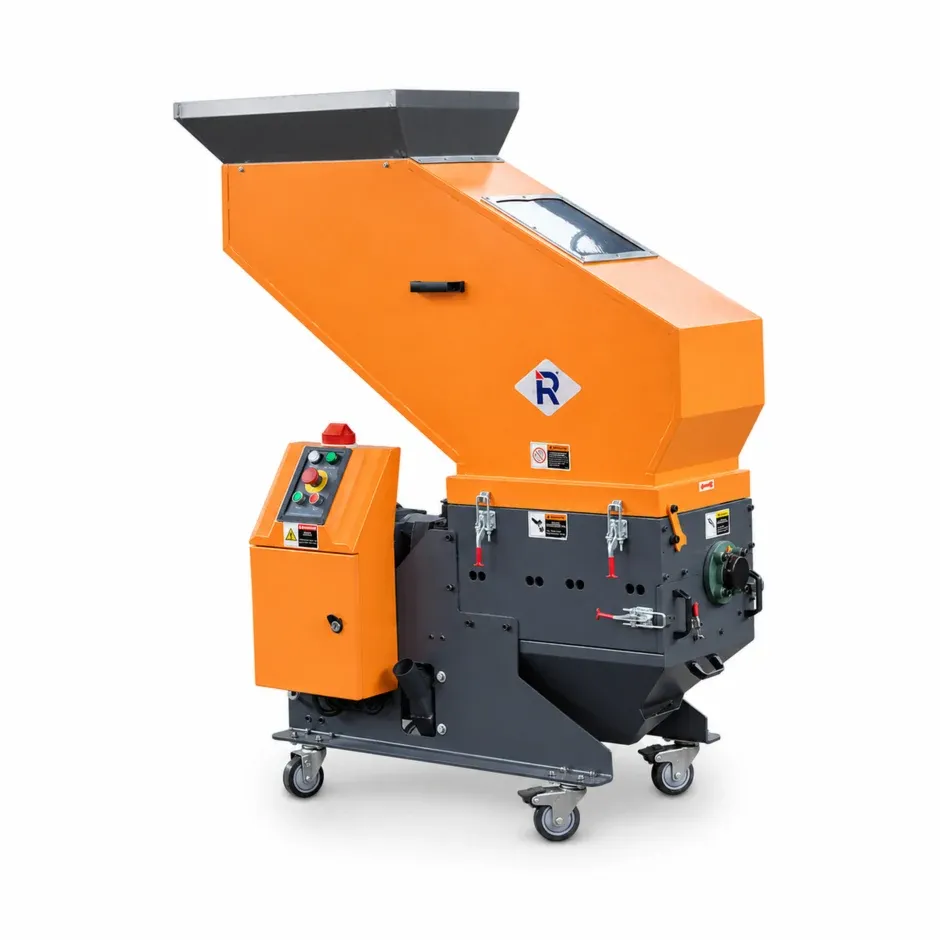
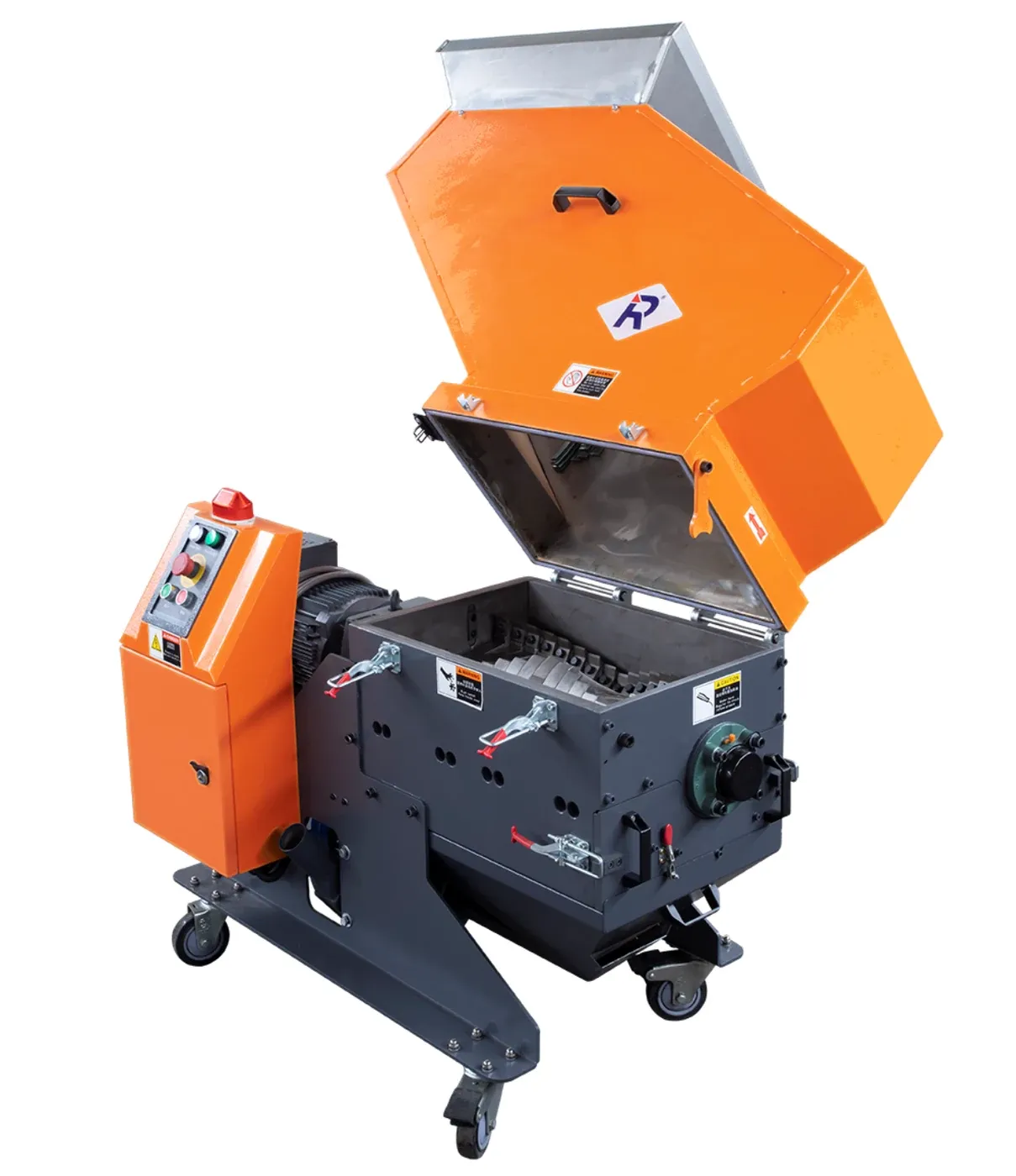
The RG-18, RG-20 and RG-23 catalogue group covers low-speed granulators placed beside injection molding machines. Manual or robot feeding brings small sprues, runners and rejects into the cutting chamber. A direct gear drive turns the cutting assembly; this is a different machine layout from a belt-driven central recycling station.
Show the complete runner tree and the thickest section, including the gate and any joined parts. The longest dimension affects the feed path, while thick junctions create a different cutting load from a thin runner.
The catalogue shows blower conveying and proportional-valve return arrangements. Choose the collection or return route alongside the granulator. The required proportion of regrind is a production decision that depends on the resin and finished product; the machine name does not set it.
Describe whether scrap is fed after each molding cycle or accumulated for later processing. Robot drop position, available floor space and access to the receiving container should be part of the layout review.
Low-speed cutting still requires access to the chamber and blades. Discuss material or colour changeovers and how the collection route will be cleaned. For an inquiry, include polymer, sprue photographs, maximum dimensions and the molding cycle, then identify the receiving hopper or loader. The vacuum conveying arrangement can be reviewed against that return route.
No. The RG-18 / RG-20 / RG-23 catalogue includes a sizing screen; low-speed cutting does not by itself mean screenless construction. The RG-27R screenless range uses a different cutting arrangement. Specify the construction as well as the speed category when comparing equipment.
The screenless versus screened guide compares cutting layouts. For the workshop arrangement, use the beside-the-press versus central granulation guide.
The RG-18 / RG-20 / RG-23 catalogue specifies a stainless-steel inner hopper lining and feed inlet, with rubber embedded in the hopper flange. When comparing a machine for material or colour changes, identify the material-contact surfaces and the collection route that will need checking between runs. Confirm the construction for the quoted configuration.
A screenless granulator and a screened granulator can both recover injection molding sprues beside the press. Compare the cutting arrangement against the runner shape, the way it …
Use the same material, output requirement and operating conditions when comparing machines. Start with the scrap that will actually reach the feed opening.
RG-26E
Cut sprues, runners and production offcuts into regrind for a planned recovery process.
View details for RG-26E General-purpose plastic granulator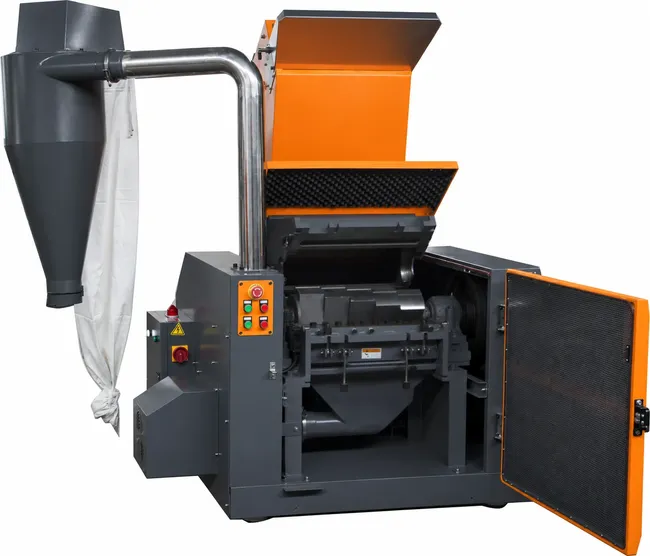
RG-26GQ
An enclosed RG granulator for molding scrap where the workshop layout and noise requirements influence equipment selection.
View details for RG-26GQ Enclosed plastic granulator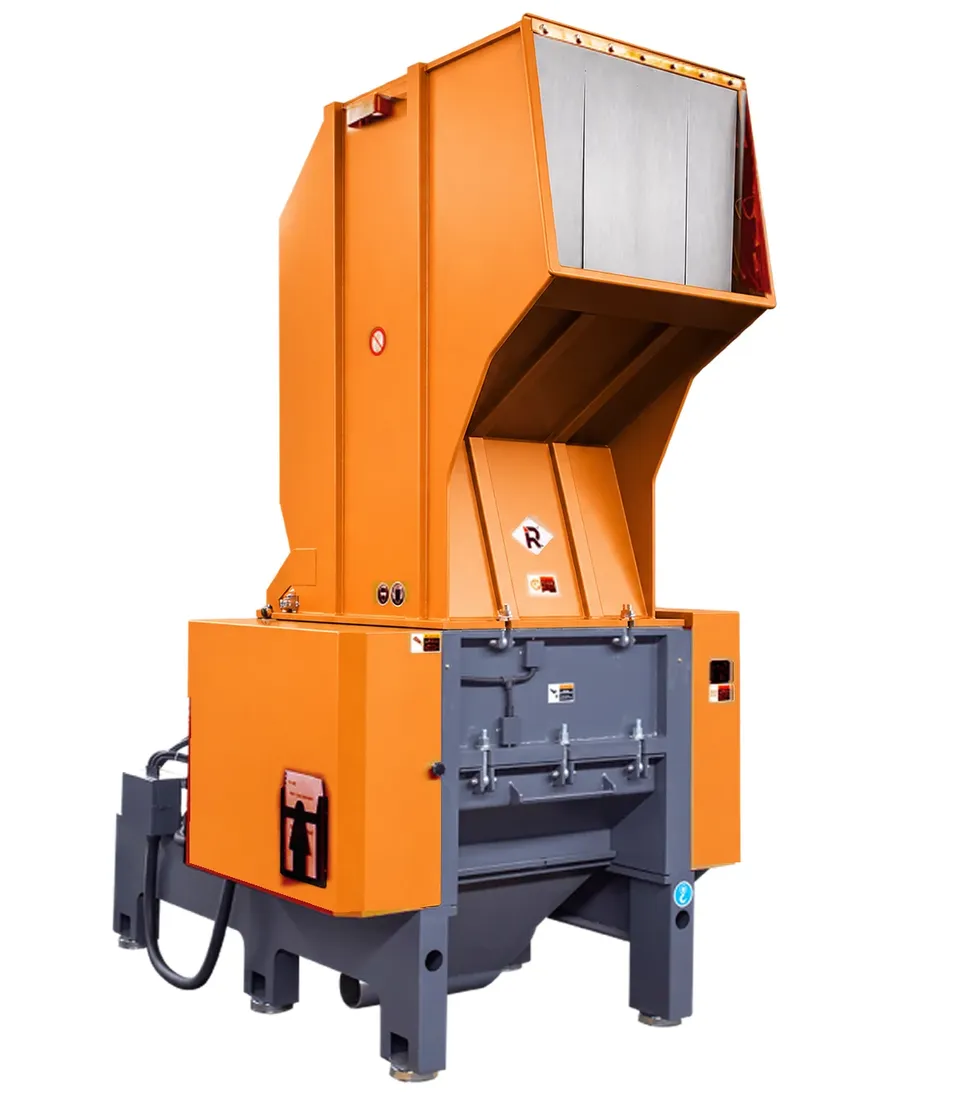
RG-56E
The RG-56E range cuts plastic parts and bulky production scrap for further recovery.
View details for RG-56E Heavy-duty plastic granulatorSend your requirements or questions to RHONG.