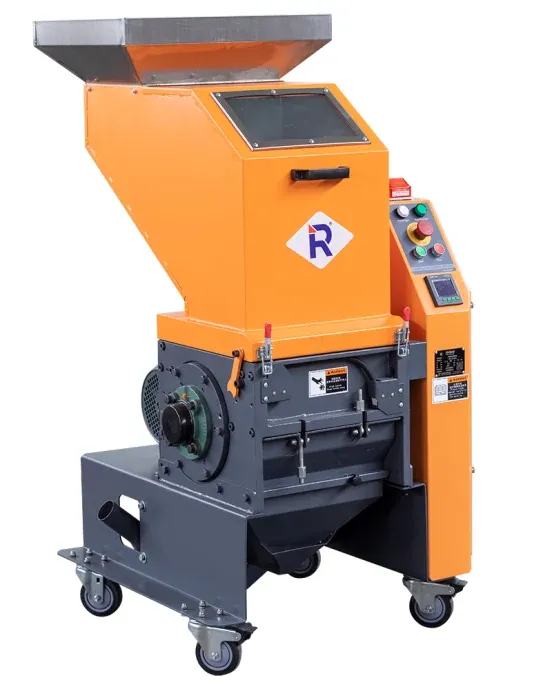
Choose a route for each scrap stream
A runner released every molding cycle and a container of rejected parts are different feeding tasks. Start by separating them on the layout drawing. Record the resin grade, fillers, color, complete piece dimensions and thickest section. A machine that accepts a runner may not accept a rejected molding from the same press.
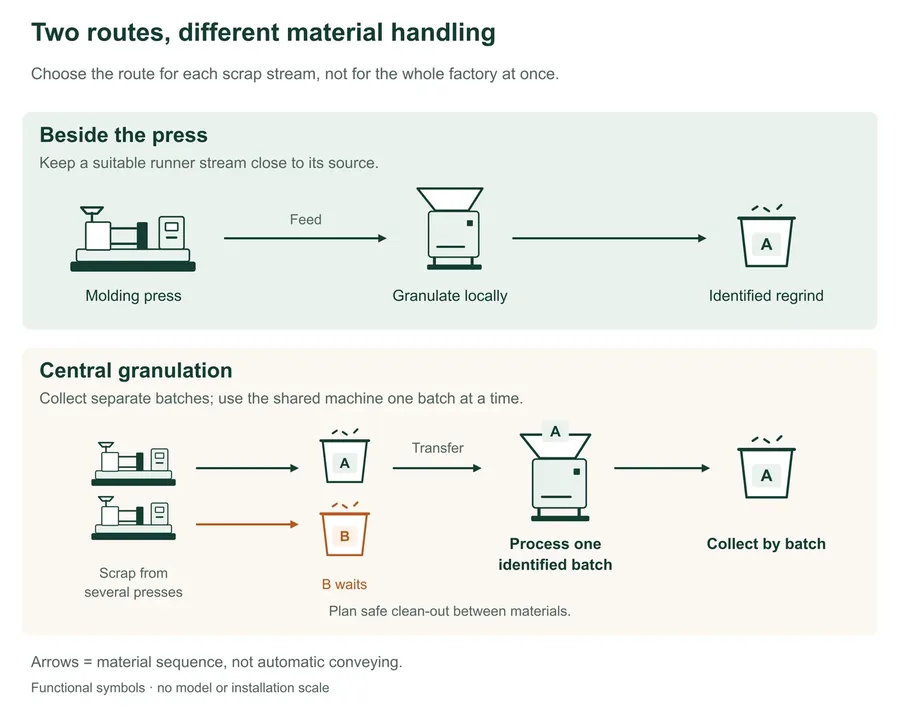
The useful question is where each identified stream can be collected, processed and sent onward with the fewest unnecessary transfers. Location alone does not control contamination: material identity must remain clear through collection, granulation and reuse.
Which conditions favor each layout?
| Condition in the workshop | Beside the press | Central station |
|---|---|---|
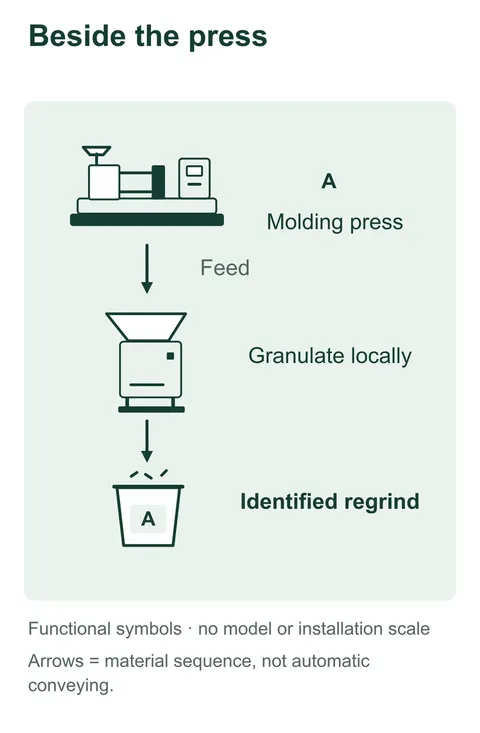
| Regular runners from a defined molding job | A short local route is a practical starting point. | Consider it if collection and scheduled processing suit production better. |
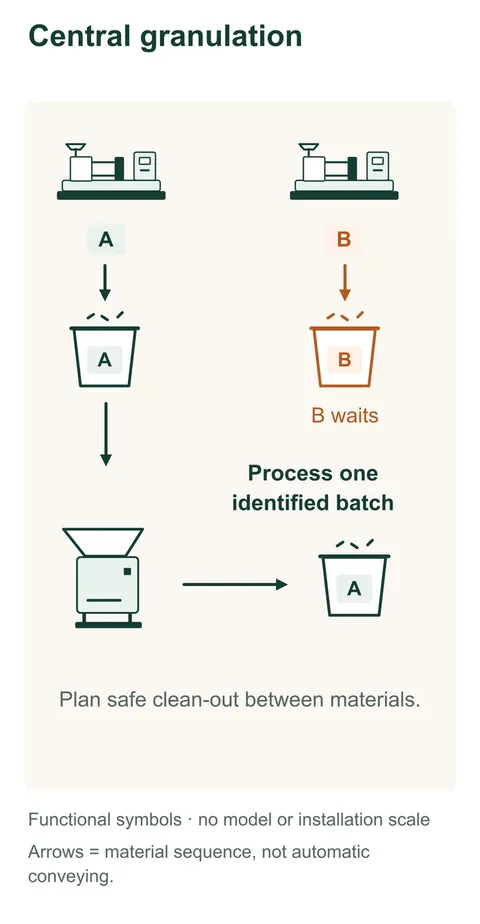
| Scrap collected from several presses | Keep selected streams local where useful. | Plan separate, identified batches and their processing sequence. |
| Occasional larger rejects | Assess them separately from the normal runner feed. | Provide a separately specified route; central location does not establish machine suitability. |
| Frequent resin or color changes | Include clearing the local collection and return path. | Include segregated storage, batch scheduling and shared-machine clean-out. |
Match feeding to arrivals, not just the daily total
For a beside-the-press route, compare the complete runner and proposed feed method with the molding cycle. Include startup scrap and rejected shots as well as normal production. A regular cycle can become an irregular feeding task when accumulated scrap is presented together.
For a central station, record batch quantity, delivery frequency and available processing hours. The same daily quantity delivered in batches creates a different task from pieces arriving throughout the shift. Allow for the waiting material, controlled feeding and removal of regrind; the granulator cannot be considered in isolation.
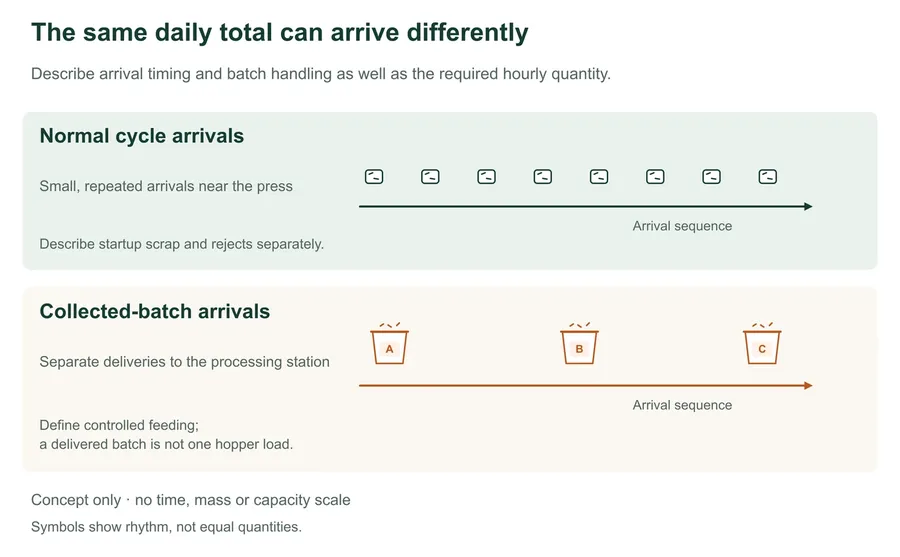
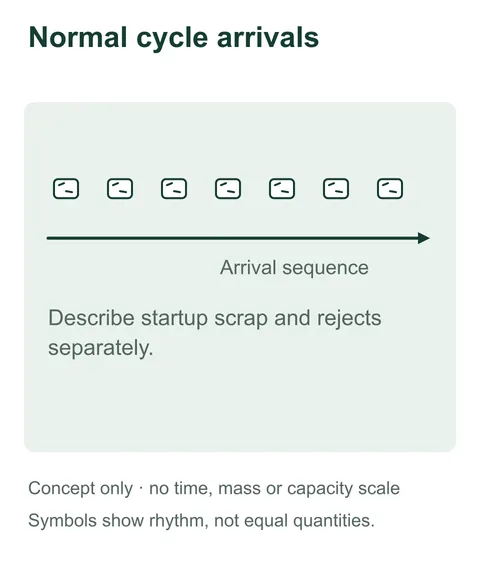
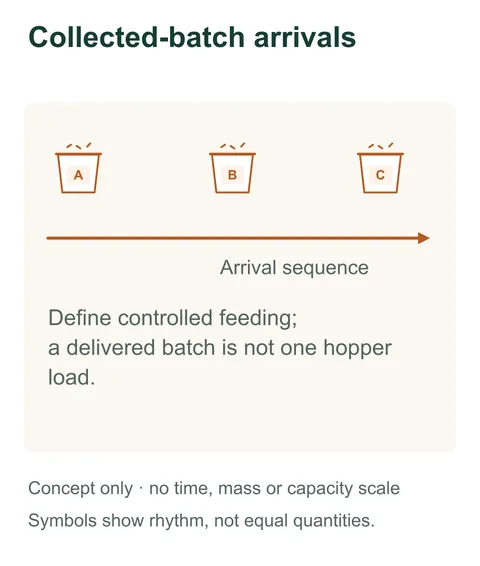
A combined layout can follow the material
Consider a hypothetical workshop with two presses running different resin grades. One produces regular small runners; the other has occasional rejected parts requiring separate assessment. Keep the first runner stream beside its press if its feed arrangement and intended reuse fit the job. Collect the other stream in labeled containers for scheduled processing at a separately specified station. Keep both materials distinct.
This example illustrates splitting routes by task, rather than requiring one granulator at every press or moving all scrap to one room. Larger rejects still need their dimensions and cutting requirements assessed. Solid purgings may require a different size-reduction route.
Compare complete proposals on the same basis
For both proposals, use the same scrap description, operating hours and required hourly processing quantity. Separately define the required regrind quality, including the particle size and cleanliness needed by the next process. Ask which material, feed method, cutting configuration and discharge arrangement underlie each quoted capacity.
Compare the whole route: collection containers, transfer, waiting space, feeding, regrind collection and its destination. Show operator access, cleaning and maintenance space as well as the closed machine footprint. This makes missing equipment and handling steps visible before comparing prices.
Define how regrind will be identified and accepted in production. A return connection does not set an acceptable reuse proportion: that depends on the material and finished-part requirements in the actual molding process. Keep unsuitable or unverified material outside the approved reuse stream.
Where RHONG's catalog examples fit
RHONG's RG-16R / RG-21R catalog describes a beside-the-press route for small sprues and small rejects, with manual or robot feeding.
The RG-26GQ / RG-36GQ catalog describes enclosed central granulation. These are two published application examples to start an equipment discussion; they do not define a complete factory conveying system.
Use the granulator selection guide for the machine comparison brief. The screenless versus screened guide covers the separate cutting decision. Send RHONG your scrap list and layout to discuss the equipment scope.
Sources
Feeding and installation considerations: Conair's Granulating Scrap Successfully and WITTMANN's How to feed a beside-the-press granulator with sprues (pages 8–9). The diagrams and workshop example are explanatory illustrations, not an installation record or performance test.